
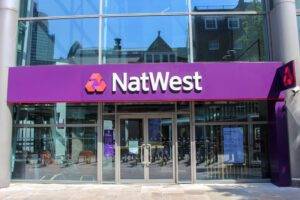
Ministers have set the high street banks on notice. The Treasury has commissioned an independent review into the impact of more than 6,700 bank branch closures across the UK, and has signalled it is prepared to compel lenders to provide face-to-face services where the evidence shows communities and small businesses are being left adrift.
The Access to Banking Review, announced on Thursday by Lucy Rigby, the economic secretary to the Treasury, will be led by Richard Lloyd OBE, the former executive director of consumer group Which? and a one-time interim chair of the Financial Conduct Authority. Lloyd has been asked to report back by October, gathering evidence on where branch withdrawals have bitten hardest, who has suffered most and where new intervention is needed.
The review lands alongside the government’s Enhancing Financial Services Bill, trailed in the King’s Speech, which the Treasury said would arm ministers with powers to “act swiftly if the evidence supports intervention on access to banking services”. In Whitehall parlance, that is unusually direct language — and a clear shot across the bows of an industry that has spent a decade thinning out its physical estate.
A decade of decline
The scale of the retreat is striking. According to consumer champion Which?, 6,719 branches have shuttered since 2015 — an average of roughly two a day. Lloyds Banking Group, NatWest, Barclays, HSBC and Santander have all taken the axe to their networks, with a fresh tranche of more than 130 closures pencilled in for May and June alone.
The economics from the banks’ perspective are not in dispute. Customers have migrated en masse to mobile apps, footfall has collapsed and the cost of running a Victorian-era branch estate has become harder to justify to shareholders. But the human and commercial fallout has been uneven, with rural towns, older customers and cash-reliant small traders disproportionately affected — a pattern Business Matters has tracked over several years and documented in its reporting on more than 6,000 UK branch closures.
Hubs: helpful, but not enough
The industry’s answer has been the shared banking hub: a Post Office counter for everyday cash and cheque needs, with the big lenders taking it in turns to send their own staff into a private room for more complex queries, typically one bank per weekday. Some 234 hubs have opened since April 2021, and Labour pledged in its manifesto to push the total to 350 by 2029.
Yet hubs come with a structural weakness. While the Financial Conduct Authority polices access to cash, there are no statutory rules governing what banking services must actually be provided inside a hub, those decisions remain at the banks’ discretion. The Post Office’s role as the de facto banking partner has been a lifeline for many high streets, but small business owners say the model still falls short on lending conversations, complex account servicing and the kind of relationship banking that used to be taken for granted.
That gap matters. For owner-managers running a café, a building firm or a one-van logistics operation, the disappearance of a local branch is not an inconvenience, it is a productivity tax. Cash takings have to be banked further afield. Loan applications increasingly run through opaque, centralised credit-scoring systems. And the local manager who once knew the business, and could vouch for it, has all but disappeared.
A turning tide?
There are tentative signs the industry is reading the room. Barclays last year began reopening high street branches and reinstating the role of the bank manager, an explicit bet that physical presence, and human judgement, is once again a competitive advantage. Whether that becomes a trend or remains a marketing flourish will depend in no small part on what Lloyd’s review concludes.
Rigby was careful to frame the exercise as evidence-led rather than punitive. “We are supporting industry’s rollout of banking hubs, but we also need a clear picture of where communities are still losing out,” she said. “This independent review will show us where the problems are and what further action may be required, and we will move quickly to legislate where the evidence shows it is needed.”
Lloyd, for his part, signalled an open-door approach. “It’s important to take stock of the impact that the big shift to digital services has already had, and to understand the need for access to in-person banking in the future,” he said. “I hope to hear from as wide a range of views as possible.”
What it means for SMEs
For Britain’s 5.5 million small businesses, the review is more than a consumer issue dressed up in policy language. Access to a banker who understands the trading rhythms of a local economy has historically been a quiet but consequential ingredient in SME growth. Should Lloyd’s report conclude — as campaigners expect — that hubs alone cannot plug the gap, the Enhancing Financial Services Bill gives ministers the statutory teeth to mandate minimum service levels.
That would represent a significant philosophical shift: from leaving branch strategy to commercial discretion, to treating face-to-face banking as something closer to a regulated utility. The banks will lobby hard against any such reframing. But after a decade in which the lights have gone out above 6,700 high street branches, the political mood in Westminster, and the patience of small business owners, is wearing visibly thin.
Read more:
Treasury orders review into bank branch closures as small firms count the cost