
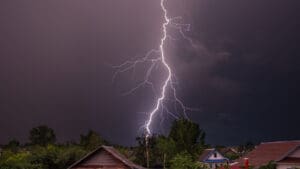
Lightning is one of nature’s most sudden and powerful forces, capable of causing extensive damage to property and infrastructure and posing serious risks to human safety.
Traditional methods of predicting lightning events have often relied on general weather forecasts or historical data, which may not provide precise insights into localized strike patterns. With the increasing complexity of modern environments, understanding where and when lightning might strike has become more crucial than ever for planners, engineers, and safety professionals. Advances in technology are now enabling more sophisticated approaches to anticipating these dangerous events.
Lightning risk assessment is one method that combines meteorological data, terrain analysis, and historical strike patterns to evaluate the likelihood of lightning in a given area. By integrating AI into this process, experts can analyze vast datasets to identify potential high-risk zones and predict strikes with greater accuracy. This approach supports informed decision-making, helping communities and infrastructure prepare for one of nature’s most unpredictable hazards.
Understanding the Challenge of Lightning Prediction
Forecasting lightning is recognized as one of meteorology’s greatest challenges. The variables at play include temperature changes, shifts in humidity, fluctuating wind patterns, and the constant evolution of cloud structures. Each of these factors can influence the likelihood and behavior of electrical storms. Traditional forecasting tools often struggle to incorporate this complexity in real time, leading to missed warnings or false alarms. This ongoing uncertainty has driven the search for more advanced solutions, particularly in regions with frequent thunderstorms.
AI’s Role in Enhancing Lightning Forecasts
AI is revolutionizing predictive meteorology by rapidly and accurately processing immense datasets. Machine learning algorithms are trained on both historical and current weather data, uncovering correlations that are often invisible to human analysts. These algorithms continuously learn and adapt, fine-tuning their predictive accuracy with every new data point. By aggregating information from satellite feeds, ground-based lightning detection networks, and atmospheric sensors, AI-driven systems generate dynamic, location-specific forecasts that far exceed the reliability of legacy models.
Notable AI-Driven Lightning Prediction Systems
Many groundbreaking lightning prediction systems are now operational, each leveraging AI in unique ways to improve public safety and disaster prevention:
NOAA’s LightningCast: The National Oceanic and Atmospheric Administration’s LightningCast platform uses AI to analyze satellite imagery, providing lightning forecasts up to one hour in advance. This is especially beneficial for outdoor events and aviation, helping to reduce lightning-related incidents.
Bar-Ilan University’s AI Model: Researchers at Bar-Ilan University in Israel have developed an AI model that predicts lightning-induced wildfires with over 90% accuracy. Drawing on seven years of satellite data and accounting for factors such as vegetation and weather, this innovation supports regions at risk of lightning and wildfires.
Benefits of AI in Lightning Prediction
Improved Accuracy: AI can manage and interpret complex, high-volume datasets, enabling meteorologists to make more precise, dependable lightning forecasts. This reduces the likelihood of both missed warnings and unnecessary panic.
Timely Warnings: Advanced prediction enables earlier alerts, giving people and organizations more time to implement protective measures. This is critical for safeguarding those in exposed areas such as parks, sports arenas, and construction sites.
Resource Optimization: With more accurate forecasts, emergency services can plan and deploy interventions more efficiently. This optimizes personnel deployment and reduces the costs associated with over-preparation or inefficient responses.
Challenges and Considerations
Implementing AI in meteorology presents several key challenges and considerations. The effectiveness of AI systems depends heavily on the quality, consistency, and comprehensiveness of input data, as gaps or biases can compromise reliability and lead to inaccurate predictions. Model interpretability is another concern, as many AI models operate in an opaque manner, making it difficult for users and decision-makers to understand how conclusions are reached. Enhancing transparency is essential for building trust and encouraging adoption among meteorological agencies and the public. Additionally, integrating AI-driven predictions into existing forecasting infrastructures requires compatible technology and adjustments to operational protocols, ensuring that both broad-scale forecasts and hyper-local alerts are delivered effectively.
Future Directions
The future of AI in lightning prediction is full of potential. Researchers are actively seeking ways to refine algorithms, enrich real-time data collection, and further blend AI-driven insights with current meteorological models. Encouraging collaborations among atmospheric scientists, computer engineers, and public policy experts will be vital in driving these advancements forward.
Expanded interdisciplinary efforts and real-world testing are expected to set new safety standards. In addition, ongoing projects by global leaders like the World Meteorological Organization highlight the universal relevance of AI-powered lightning forecasting, setting the stage for more robust disaster risk reduction efforts worldwide. For more details, NOAA explores the role of AI in modern weather forecasting. As these technologies evolve, communities can anticipate increasingly proactive and precise measures to mitigate lightning-related risks.
Conclusion
AI is rapidly enhancing our ability to predict and manage lightning strikes, delivering critical improvements in accuracy, warning times, and response strategies. Despite present challenges such as data integrity and system transparency, the field is moving swiftly toward comprehensive solutions that help build safer, more resilient communities. As technological innovations in lightning risk assessment become more widely adopted, society stands to gain from fewer casualties, protected property, and a more informed response to one of nature’s most formidable dangers.
Read more:
AI and Lightning Risk: Predicting Strikes Before They Happen