
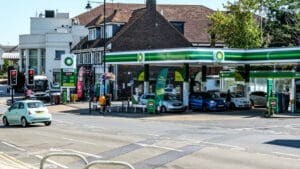
The sharp rise in fuel prices triggered by the global energy shock has reached what campaigners describe as a “critical point”, with mounting concern that small businesses and motorists are bearing the brunt of escalating costs.
According to campaign group FairFuelUK, more than a third of sole traders surveyed, including tradespeople such as plumbers, electricians and bricklayers, say current pump prices could push their businesses towards collapse unless action is taken to ease the burden.
The warning reflects the growing pressure on sectors that rely heavily on road transport, where rising diesel costs in particular are feeding directly into operating expenses and squeezing already tight margins.
The survey, based on responses from 3,678 sole traders, found that 36.4 per cent believe sustained high fuel prices could threaten their viability. For many, fuel represents one of the largest day-to-day costs, particularly in industries where travel between jobs is essential.
Campaigners argue that without intervention, higher fuel costs risk reducing profitability, limiting business activity and ultimately leading to job losses across key parts of the economy.
At the same time, a broader opinion poll cited by FairFuelUK suggests overwhelming support among motorists and small businesses for government action, including cuts to fuel duty and greater oversight of pump pricing.
Howard Cox, founder of FairFuelUK, has urged the government to maintain the current freeze on fuel duty for the duration of the Parliament and to consider further reductions to ease immediate pressure.
He also called for the removal of VAT on fuel duty, often described as a “tax on a tax”, and the introduction of a regulatory body to monitor fuel pricing and ensure transparency across the market.
The proposals come as fuel prices continue to rise in response to higher oil costs, with motorists already experiencing significant increases at the pump in recent weeks.
Campaigners have pointed to measures taken in other countries, including France, India and Italy, where governments have intervened to cap prices, reduce fuel taxes or support supply chains.
These comparisons have intensified the debate in the UK over whether similar steps should be taken to shield consumers and businesses from the impact of global energy volatility.
Chancellor Rachel Reeves has previously described rising fuel and energy costs as the result of “global turbulence”, emphasising the external nature of the pressures facing the UK economy.
However, critics argue that domestic policy choices, particularly around taxation, could play a more active role in mitigating the impact on households and businesses.
The issue is further complicated by broader fiscal constraints, with the government seeking to balance support measures against the need to maintain stable public finances and control inflation.
Economists warn that sustained high fuel costs could have ripple effects across the economy, increasing transport and logistics expenses, pushing up prices for goods and services, and weighing on consumer spending.
For small businesses, the impact is particularly acute, as they often lack the financial resilience to absorb cost increases or the pricing power to pass them on to customers.
The situation also raises concerns about inflation, as higher fuel costs feed into broader price pressures, potentially limiting the scope for interest rate cuts and prolonging the cost-of-living squeeze.
With global energy markets remaining volatile, the pressure on policymakers is likely to intensify in the coming months.
For campaigners, the message is clear: targeted intervention on fuel costs could provide immediate relief and support economic activity.
For the government, the challenge lies in balancing those demands with fiscal discipline and long-term energy policy objectives.
As fuel prices continue to rise, the debate over how best to respond is set to become an increasingly central issue for both businesses and policymakers alike.
Read more:
Fuel price crisis risks pushing small firms to brink as pressure mounts on chancellor