
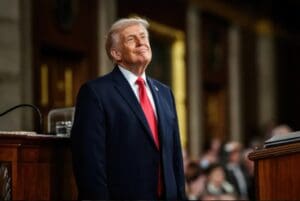
Britain’s distillers have been handed an unexpected fillip after Donald Trump announced the removal of all US tariffs and restrictions on whisky imports, a concession the president attributed directly to the influence of King Charles and Queen Camilla’s four-day state visit to America.
The decision, revealed on Trump’s Truth Social platform shortly after the royal couple departed for the UK, brings to an end a punishing 10 per cent levy that the Scotch Whisky Association estimates has been costing the industry roughly £4m a week, some £150m over the past year, at a time when distillers were already bracing for a further 25 per cent charge on single malts due to return this spring.
For an industry that counts the United States as its largest export market, with shipments worth close to £1bn annually, the timing could scarcely have been more welcome. Trump told reporters in Washington that the King and Queen “got me to do something that nobody else was able to do, without hardly even asking”, adding that he had moved “in honour” of his royal guests.
Buckingham Palace responded with characteristic understatement. A spokesperson said the King had conveyed his “sincere gratitude” to the president and would be “raising a dram to the President’s thoughtfulness”.
The decision also unlocks renewed commercial co-operation between Scotland and the Commonwealth of Kentucky, two regions historically intertwined through the trade in used bourbon barrels. The Scotch industry imports roughly £200m-worth of these casks from Kentucky each year, using them to mature its single malts and blends. Trump noted the linkage explicitly, describing both as “very important industries” in their respective territories.
Graeme Littlejohn, director of strategy at the Scotch Whisky Association, told Business Matters the industry was “delighted” by the move. “Distillers will breathe a sigh of relief now that these tariffs are off,” he said. “It’s really thanks to the huge amount of negotiation that’s been going on over many months, at a very senior level. Perhaps the state visit has been the catalyst for getting this over the line, and the King’s added that little bit of royal sparkle to make the deal work.”
Scotland’s First Minister, John Swinney, hailed the announcement as “tremendous news for Scotland”, noting that “millions of pounds were being lost every month from the Scottish economy” under the previous regime. He paid particular tribute to the monarch’s behind-the-scenes role.
The UK government confirmed that the removal applies to all whisky tariffs, including those affecting Irish whiskey producers, a clarification that will be welcomed by distillers on both sides of the Irish Sea. Peter Kyle, the Business and Trade Secretary, called the breakthrough “great news for our Scotch whisky industry, which is worth almost £1bn in exports and supports thousands of jobs across the UK”.
For SMEs across the sector, from craft distillers in Speyside to family-run bottlers in the Highlands and Islands, the lifting of tariffs offers a tangible reprieve. Single malts, which command premium prices in the American market, have been disproportionately affected by the Trump-era levies, and smaller producers without the balance-sheet depth of multinational rivals have felt the squeeze most acutely.
The development represents a rare instance of soft power translating directly into hard economic gain. Whether it heralds a broader thaw in transatlantic trade relations remains to be seen, but for an industry that has spent the better part of a year absorbing the costs of protectionism, the immediate message is clear: the dram is back on.
Read more:
Whisky tariffs lifted as Trump hails royal state visit