
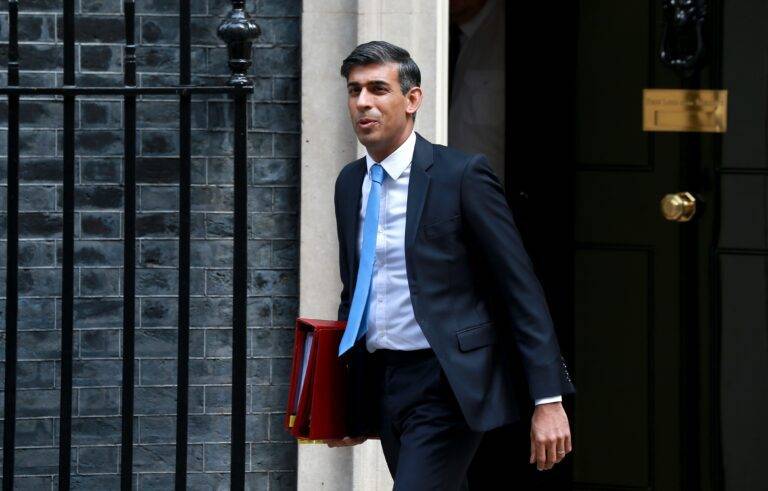
Rishi Sunak has conceded that the multi-billion-pound business support schemes he designed as chancellor during the pandemic propped up companies that “would and should” have gone under, in a striking admission that has reignited the debate over how far the state should go to keep struggling firms alive.
Writing in The Times to coincide with America’s 250th anniversary celebrations, the former prime minister argued that Britain must learn to embrace the “creative destruction” that has powered the US economy ahead of its rivals, even if that means watching more businesses fail.
“It is never easy to sit in the Treasury and watch a business go under, but intervening is nearly always the wrong thing to do,” Sunak wrote, adding that the rush to assemble Covid support schemes left no time to distinguish between fundamentally weak firms and viable businesses knocked sideways by lockdowns. “As chancellor, this was one of the things I worried about most: had these interventions upended the natural processes of the economy? I fear they did.”
The intervention will resonate uncomfortably with the hundreds of thousands of small business owners who credit furlough, bounce back loans and business rates relief with their survival, but Sunak’s diagnosis of the UK’s underlying malaise is harder to dismiss.
At the heart of his argument is the claim that Britain’s economy has lost its dynamism. Nearly one in ten listed UK firms is now a so-called zombie company, generating just enough cash to service its debts and little else, a figure that has doubled since the financial crisis. As Business Matters reported earlier this year, a fresh wave of zombie firms is already facing collapse as HMRC begins to call in pandemic-era tax arrears.
Sunak points to OECD research on declining business dynamism showing that firm entry and exit rates have fallen by around three percentage points across the developed world since 2000. Before the financial crisis, the churn of firms entering and leaving the market added an estimated 0.7 per cent to UK productivity growth. That contribution has since collapsed to just 0.1 per cent.
The contrast with the United States is stark. The median age of America’s 20 largest listed companies has fallen from 124 years in 2010 to 50 in 2025, as new technology firms displaced older incumbents. In the UK, the equivalent figure has risen from 94 to 121 over the same period.
The result, Sunak argues, is an economy in which neither labour nor capital flows to where it is most productive. UK GDP per head now sits 42 per cent below America’s, and Office for National Statistics comparisons show British output per hour worked has trailed the US, France and Germany for four decades, though as Business Matters has previously explored, not everyone accepts the conventional reading of Britain’s productivity numbers.
Sunak attributes American outperformance to four factors: cheap and abundant energy, with British firms paying four times as much for power as their US counterparts; faster technology adoption; the dollar’s reserve currency status; and, above all, a culture that treats business failure as a normal part of entrepreneurship rather than a political emergency.
The former Conservative leader reserved particular criticism for the Employment Rights Act, which he described as “sclerosis-inducing” legislation that has undermined Britain’s flexible labour market, and which he said any future government serious about growth would have to repeal. The legislation, which cleared its final parliamentary hurdle last year, has drawn repeated warnings from small firms over hiring costs and tribunal risk.
His conclusion is unlikely to win many votes, but it is refreshingly candid for a former occupant of Number 11: “We can’t, and shouldn’t wish to, save every business. We must learn to love creative destruction or see our economic power destroyed.”
For SME owners, the message cuts both ways. A more dynamic economy promises cheaper capital, better staff and bigger opportunities for the productive majority. But it also means that the next time a crisis hits, the safety net may be considerably smaller.