
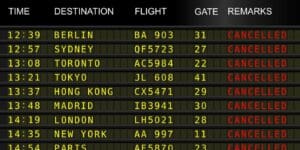
For UK businesses trading in the global marketplace today, air travel is a vital necessity rather than an enjoyable luxury.
A requirement for creating collaborations, attending meetings and conferences, making deals and keeping supply chains open. But there’s still one unpredictable danger that causes chaos with even the best-made plans: the problem of flight delays and cancellations.
While most passengers grudgingly accept any flight delay as one of life’s annoying quirks, the real impacts associated with them can be worse than looking for a comfortable spot to sleep in at the airport. For business passengers, flight delays can mean missed meetings, lost sales, extra costs and difficulties which can damage both their reputation and income.
The Productivity Impact of Travel Disruption
Time is precious in business. A delayed flight doesn’t just disrupt the next few hours; it can knock out an entire schedule for the day. A salesperson might miss an important pitch. A consultant may arrive too late to run a workshop. A client might only have 30 minutes for a meeting when an hour was expected.
Business travellers often have less flexibility than someone travelling for pleasure. Even minor disruptions can lead to longer delays and the need to rebook, stay an extra night in a hotel room or pay additional charges to change tickets. For small and medium-sized enterprises (SMEs), which often run lean operations with limited resources, this can cause significant damage.
The effects on workers, meanwhile, are harder to quantify. Delays are stressful, and they can lead to burnout, morale and productivity issues over the long term, especially for professionals who have to travel on a regular basis.
Understanding Passenger Rights in the UK
What many travellers may not realise, however, is that the law actually does have provisions in place to protect passengers. Passengers affected by flight delays, cancellations, and overbooking could be entitled to compensation under the UK’s own regulations. Under UK261 regulations — the UK’s domestic version of the retained EU passenger rights regulation — anyone who has been affected by one of the above issues, as long as the airline is responsible, could qualify for compensation.
How much compensation you can get depends on the length of the flight and how long you have been delayed. The amount available ranges from £220 to £520. The bigger picture is that passengers are entitled to this as well as a refund or to rebook and take the compensation instead. The sum is in acknowledgement of all passengers’ time lost and suffering due to the carrier’s lack of organisation.
But despite this, many passengers did not know they could claim compensation, or simply never bothered. Many eligible passengers — particularly business passengers — do not take the option to claim money and instead put it down to experience, particularly when trying to make it to that important meeting. A new study shows that over this year, passengers could be entitled to £326 million from the delays alone.
Why Awareness Matters for Businesses
Raising awareness on passenger rights among organisations can lead to better travel risk management. Companies that help their employees understand their rights can, in turn, save on costs and mitigate the financial impact of disruptions.
This is more significant for SMEs where resources are limited; thus, travel budgets are utilised sensibly as it is. Compensation received when a flight is disrupted can help make up for money lost for sudden expenses which were not part of the planned budget: additional hotel accommodations, meals, or even the cost of a replacement flight, among others.
In retrospect, keeping track of airline disruptions has its advantages in terms of business operations. Based on these data, one can ascertain the kind of disruption that can arise, which airlines have proven to be unreliable, and what standards should be taken into consideration when choosing the mode of transportation for business travel in the future.
The Role of Specialist Support Services
In recent years, support services have appeared to provide passengers with more effective tools to pursue claims. AirHelp, for example, helps passengers to understand their rights and claim the compensation they are entitled to.
This type of service can be particularly appealing to professionals who travel regularly and find themselves with little time to deal with the process. By managing the documentation, contact with the airline and legal follow-up where necessary, they save a lot of time compared to the do-it-yourself approach.
Passengers who would like to have a better idea of their possible eligibility or avenues for claiming compensation can find a resource like AirHelp that details situations where they may be able to claim compensation.
Turning Disruption into Better Planning
While delays remain a fact of life, organisations can protect themselves by taking a pragmatic approach to limiting the impact of delays. Leaving an adequate buffer between the flight’s arrival and a critical meeting, proactively choosing airlines with strong on-time records, and making sure employees both know their rights and protect themselves against disruption when things do go awry can all strengthen how effectively flight delays are managed.
Technology, too, can make it easy to monitor flights and re-book when things do go wrong. There are both travel management websites and mobile phone alerts that will keep executives constantly informed and in a strong position to respond.
Understanding, though, is the greatest asset. Both when those on the move and those providing alternative means of getting them where they need to be know what to fear and what to anticipate, delay, and disruption are easily overcome.
A Changing Landscape for Business Travel
International business travel is on the up, but with it, accountability and passenger protection also need to increase. Flight delays are part of the industry’s landscape, but there’s no need to simply accept the financial and productivity losses without leveraging the rights and support that are actually in place.
With more global travel comes the right to support flight delays. By doing this, UK companies and workers can keep losses to a minimum, remain productive, and hopefully keep travel between borders for what really matters: growth, connection, and opportunities.
Read more:
The Hidden Business Cost of Flight Delays and What Travellers Should Know