
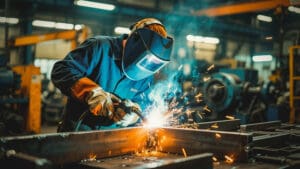
In manufacturing, the phrase “cutting edge” is far more than a corporate buzzword. It represents the literal physical point where raw materials transform into high-value, functional components for the modern world.
Traditional mechanical sawing and shearing methods increasingly struggle to meet the demands of modern superalloys and complex geometries.
Meanwhile, engineers and designers consistently demand tighter tolerances, faster turnaround times, and superior thermal management from their fabrication partners. Advanced material-separation technologies are actively pushing the boundaries of precision and operational speed on the factory floor.
The following industrial methods represent the absolute pinnacle of material shaping and fabrication.
1. Fiber Laser Cutting
Fiber lasers utilize a solid-state laser focused intensely through sophisticated fiber optics. This highly concentrated beam melts and vaporizes the targeted material almost instantly upon direct contact. Consequently, the process achieves unmatched operational speed on thin-to-medium metal sheets. It operates with exceptional energy efficiency compared to older, legacy CO2 laser systems.
The widespread shift to fiber technology has drastically reduced operational costs across the entire sheet metal fabrication industry. Typical industrial applications include slicing swiftly through carbon steel, stainless steel, and structural aluminum plates.
The resulting cut edges are incredibly smooth and require minimal secondary processing or manual grinding.
2. Abrasive Waterjet Cutting
This specific method relies entirely on extreme pressure and accelerated mechanical erosion rather than thermal energy. A specialized pump generates highly pressurized water and focuses it strictly through a tiny ruby or diamond jewel orifice.
The resulting high-velocity stream creates a sudden vacuum in a venturi section, drawing in a granular abrasive material such as hard garnet. This heavy mixture then travels through a tough ceramic mixing tube to form a highly precise cutting stream.
A standard water jet cleanly slices through thick titanium and heat-sensitive superalloys without altering their base metallurgical properties. Facilities that operate Omax equipment use high-efficiency direct-drive pumps to deliver water pressure up to a staggering 60,000 PSI. Because there is absolutely no heat-affected zone, operators avoid thermal distortion entirely and strictly preserve the material’s structural integrity.
3. High-Definition Plasma Arc Cutting
Plasma cutting deliberately directs a powerful electrical arc through a compressed gas stream, such as nitrogen or oxygen. This specific action creates a superheated, high-speed plasma jet that instantly melts through incredibly thick, conductive metals.
It is the most cost-effective method for separating heavy structural steel beams and thick aluminum plates. The automated cutting torch moves exceptionally quickly across large surface areas to maximize daily production output. Operators frequently rely on heavy-duty plasma systems for massive fabrication projects, commercial bridge building, and industrial shipbuilding.
It reliably delivers a highly respectable, clean edge quality on extremely thick materials that industrial lasers cannot easily penetrate.
4. Wire Electrical Discharge Machining
Wire EDM uses a hair-thin, electrically charged wire of brass or zinc to slowly erode dense conductive material. The entire mechanical process takes place completely submerged within a specialized dielectric fluid tank.
Thousands of microscopic electrical sparks rapidly vaporize the metal without any direct physical contact between the wire and the workpiece. Therefore, the tensioned wire can successfully cut incredibly complex, tight-tolerance internal shapes and mathematically sharp corners. It works exceptionally well on the absolute hardest known metals used in modern tooling and aerospace design.
Common industrial applications include hardened tool steels, pure tungsten, and aerospace-grade Inconel alloys. The extreme micro-precision easily justifies the relatively slow cutting speed required for this operation.
5. Ultrasonic Acoustic Cutting
This unique technology relies on a sharp, specialized blade oscillating at ultrasonic frequencies well above 20,000 Hz. The rapid microscopic vibration allows the knife to smoothly slice through highly resistant materials with near-zero physical friction.
Consequently, the sticky material never actually adheres to the blade during continuous industrial operation. It cuts cleanly and decisively without fraying or crushing delicate internal cellular structures.
Aerospace manufacturers deploy it specifically for cutting advanced carbon fiber prepregs and delicate honeycomb cores used in aircraft wings. It also works perfectly for shaping dense rubber components and portioning various industrial food products on automated, high-speed assembly lines.
6. Robotic 3D Cutting Systems
Robotic 3D systems securely mount versatile cutting heads directly onto highly articulated, multi-axis robotic arms. This dynamic physical setup entirely frees the cutting process from the rigid, flat constraints of a traditional two-dimensional gantry table.
The agile robotic arm can smoothly maneuver completely around complex, highly contoured three-dimensional objects. It seamlessly trims, hole-punches, and slices large stamped metal parts in a single, continuous, uninterrupted setup.
Automotive manufacturers rely heavily on this automated technology for shaping curved exterior body panels and complex internal structural piping. It delivers ultimate physical flexibility and rapid turnaround for highly custom, large-scale structural fabrications.
Conclusion
The correct cutting technology directly dictates the ultimate quality and overall speed of any major manufacturing run. Smart software integration and automated digital sensors continually refine these processes to maximize factory yield. Facilities must carefully evaluate their current material separation methods against these powerful modern technological advancements.
Read more:
The Cutting Edge of Manufacturing: 6 Technologies Changing Everything