
After more than five years of painstaking negotiation across six capitals, Britain has finally landed its long-awaited free trade agreement with the Gulf Cooperation Council, a deal ministers say will add £3.7 billion a year to the economy and put UK exporters at the front of the queue in one of the world’s fastest-growing regions.
The agreement, struck with Saudi Arabia, the United Arab Emirates, Qatar, Kuwait, Bahrain and Oman, makes the UK the first G7 nation to sign a comprehensive free trade pact with the bloc. It is the fifth major deal secured by Sir Keir Starmer’s government, following accords with India, the United States, South Korea and a reset with the European Union.
For British small and mid-sized exporters, long the magazine’s core readership, the prize is tangible. Tariffs will be stripped from a wide swathe of UK goods including cheddar, chocolate, butter, cereals, medical equipment and high-end cars. The government’s conclusion summary estimates that £580 million in duties will be eliminated each year once the deal is fully in force, with £360 million scrapped on day one.
Bilateral trade between the UK and the GCC is already worth £57 billion annually. Whitehall modelling suggests the agreement could lift that figure by up to 20 per cent, raise real wages by £1.9 billion and expand UK GDP by roughly 0.1 per cent in the long run. Combined with last year’s India accord, the two deals are expected to add more than £8 billion a year to the economy by 2040.
A rare piece of good news for the Treasury
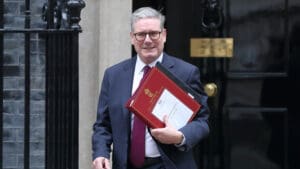
The deal lands at a politically convenient moment. With growth still sluggish and inflation stubbornly above target, ministers have been hunting for a credible pro-business win. Starmer, who has spent months pursuing the agreement on visits to Doha and Riyadh, called it “a huge win for British business” and said working people would feel the benefits “in the years ahead through higher wages and more opportunities”.
That language echoes the prime minister’s earlier push to use the Gulf agreement as a vehicle for rehabilitating Britain’s reputation as a serious commercial partner after the bruises of Brexit and the post-pandemic export slump.
Peter Kyle, the business and trade secretary, said the deal sent “a clear signal of confidence” at a moment of global trade volatility. “For this government to meet the challenges that our country faces, incremental change won’t cut it,” he said. “Major trade deals like this one are vital for moving the dial towards long-term, sustainable economic growth with benefits people and businesses can see and feel.”
What it means for SMEs
The opportunity is heavily skewed towards smaller exporters. The Gulf states import more than 80 per cent of their food, which puts British producers of dairy, confectionery, baked goods and premium beverages in pole position. Carmakers, particularly luxury marques such as Bentley, Jaguar and Aston Martin, also stand to gain from tariff removal on vehicles, where rates have typically sat at 5 per cent.
Services, which account for roughly 80 per cent of the UK economy and more than half of British exports to the GCC, will benefit from guaranteed market access. The government expects the deal to make it materially easier for British lawyers, engineers, architects and management consultants to travel, work and remain in the region. More than 400,000 business visits were made from the UK to the Middle East in 2024.
Crucially, the deal opens up a market in which UK Export Finance has been quietly busy. As Business Matters has previously reported, UKEF recently backed a £2.3m Saudi Arabia export contract for Hertfordshire-based Masters Speciality Pharma, the sort of mid-sized deal that the Gulf agreement is designed to multiply.
The British Chambers of Commerce gave the agreement an unusually warm welcome. William Bain, the BCC’s head of trade policy, said the deal was “great news for the UK economy” and would “open up new opportunities for inward investment, exports and supply chains”.
“There is great potential to expand our trade with this key region, which already generates £57 billion a year for the UK economy,” he said. “Securing long-term economic benefits with close trade partners, like the GCC, is vital for tens of thousands of UK firms with high ambitions on export growth.”
The Department for Business and Trade’s own benefits breakdown shows manufacturing, financial services, professional services and food and drink as the four sectors set to gain most, with detailed tariff schedules running into the thousands of product lines.
The strategic calculation
Beyond the immediate tariff savings, ministers are betting on the deeper strategic shift unfolding across the Gulf. Saudi Arabia’s Vision 2030, the UAE’s industrial diversification programme and Qatar’s push into financial and digital services all point in the same direction: away from oil dependency and towards a regional economy built on transport, tourism, technology and capital markets. By moving first among the G7, the UK is positioning itself as the preferred Western partner for that transition.
Negotiations were complicated by the need to align the often divergent economic interests of the six GCC members. That the Department for Business and Trade was able to land the agreement before Washington, Berlin, Paris or Tokyo will be seen in Whitehall as a meaningful diplomatic coup.
For Britain’s exporters, and particularly the SMEs that this magazine has long argued are the engine room of the UK economy, the practical question now is implementation. The agreement is not yet in force; the UK and all six GCC members must complete domestic ratification procedures. But with £360 million of tariff savings due on day one, the smart money is already on UK firms moving quickly to register, certify and ship.
Read more:
Britain seals landmark Gulf trade deal in G7 first, promising £3.7bn lift for UK exporters