
Eyes Openers
  • World News
  • Business
  • Stocks
  • Politics
  • World News
  • Business
  • Stocks
  • Politics

Eyes Openers

Category:

Business

Can AI chatbots really pick stock market winners?
Business

Can AI chatbots really pick stock market winners?

by June 18, 2026

Taxi drivers, stockbrokers and the bloke propping up the bar at your local have all, at one time or another, served as a source of share tips. Now there is a fresh seam of supposed wisdom for retail investors to mine: chatbots such as ChatGPT and Claude.

These artificial intelligence tools, known in the trade as large language models (LLMs), are increasingly being pressed into service by amateur and professional investors alike to generate investment ideas. Yet for all the awe AI has inspired, the jury is still out on whether the machines are actually any good at making money.

Back in 1973, the academic Burton Malkiel argued in his now-famous book that a blindfolded monkey throwing darts at the financial pages of a newspaper could pick a portfolio just as profitable as one chosen by highly paid professionals. His point, the bedrock of the efficient market hypothesis, was that returns on the stock market are essentially random and unpredictable, and that nobody can hold a lasting edge over anyone else.

The notion that LLMs might be superior stock pickers to humans would, of course, blow a hole in that theory. A clutch of start-ups has already set AI to work trading and investing, with markedly mixed results.

According to a recent test run by the US research lab Nof1, six of the eight most popular AI models lost money investing in American technology shares. Anthropic’s Claude Sonnet shed almost 60 per cent of its initial $10,000 (£7,500) stake, while Google’s Gemini gave up more than $5,000. Only two came out ahead: ChatGPT, which made nearly $900, and Elon Musk’s Grok, which roughly broke even.

To the technology’s believers, however, it is only a matter of time before LLMs start besting the very best of Wall Street.

Faizan Ahmad, a former Meta engineer, is co-founder of Rallies, a start-up that uses AI to help people choose shares. His own experiments have thrown up some eyebrow-raising results, with the machines displaying a flash of ingenuity in navigating choppy markets.

Claude, for instance, deftly handled the fallout from the conflict with Iran by rotating out of growth shares and into defence stocks. ChatGPT, meanwhile, plumped for Credo Technology Group, a high-speed connectivity firm, as a likely beneficiary of the global build-out of internet infrastructure around seven months ago. The shares have since climbed by more than 75 per cent.

“No one had heard about that stock, and I hadn’t,” says Ahmad. “That stock was starting to show very early signs of becoming core to Nvidia’s and other players’ infrastructure.

“These models get access to all of the research and can go through entire SEC [US Securities and Exchange Commission] filings. The ability to parse a plethora of information and then find a stock that actually went up quite a lot was amazing.”

Rallies has launched its AI portfolios on a service that lets retail traders copy its trades. It now has $10m of retail money shadowing ChatGPT’s picks and $14m across all of its AI portfolios. And it is not only the small investor taking an interest.

Far from the living rooms and box bedrooms of ordinary punters, the gleaming towers of the City and the professional money men are dabbling too. Algorithmic trading has long been a feature of institutional investing, a subject Michael Lewis brought to wider attention with his 2014 book Flash Boys, but the arrival of LLMs has now piqued the interest of hedge funds.

At Man Group, the world’s largest listed hedge fund, LLMs have already been behind a number of profitable trade ideas.

“We have, right now, several examples where we’ve had an idea proposed by an LLM and have passed it through our diligence process before ultimately being accepted by the investment committee,” says Tushara Fernando, head of data and AI at the firm. “If it can come up with an accepted proposal, that’s fantastic, and then the resulting code goes into production and can trade real money.”

Unlike some of the start-ups letting AI loose unsupervised, Man uses the technology to generate ideas that still require a human stamp of approval. Even so, Fernando says the sheer speed of LLMs lets fund managers kick around far more ideas than they otherwise could.

“[A fund manager] might previously have tested two to three investment ideas a day, for example, modelling different scenarios with the aim of proving out new trades,” he says. “Now they’re able to explore and backtest hundreds in a very short space of time. While they’ve gone for a coffee, the agent’s running a backtest, which uses historical data to evaluate how a potential trade would likely perform under differing conditions.”

Many of the largest hedge funds were early adopters of AI and machine learning long before LLMs went mainstream. Bridgewater Associates, the US fund founded by Ray Dalio, launched a vehicle using machine learning as the primary basis of its decision-making two years ago. In 2018, Two Sigma poached Mike Schuster, an AI specialist, from Google’s Brain team to spearhead its efforts.

Balyasny Asset Management, one of the biggest hedge funds in the US, said recently that 95 per cent of its investment teams were using OpenAI. Agents are set to work analysing and synthesising tens of thousands of documents, from company filings to research notes and earnings reports. The firm has also used AI to monitor and update the probability of mergers and acquisitions completing, and to dissect speeches by central bankers. Balyasny said the technology had slashed the time taken to work out the economic implications of those speeches from two days to 30 minutes.

Unsurprisingly, simply having access to the latest and greatest models is not enough. It is proprietary data that gives the hedge funds their edge. Anthropic announced a partnership with Man Group in February to deploy its Claude model across the firm’s investment process, both to surface new insights from data and to speed up coding tasks.

That, though, presents its own headache for firms such as Man, which must bolt cutting-edge LLMs onto their own highly sophisticated technology stacks.

“LLMs are fantastic at using public knowledge. They may know the last 12 songs on the Taylor Swift album and how to solve a Rubik’s cube, but they don’t know Man Group: our strategies, how much we trade, or our databases or execution platform,” says Gary Collier, chief technology officer at Man Group.

For the largest and most established hedge funds, then, people remain firmly at the controls. Ahmad, who intends to launch a hedge fund through Rallies in due course, is convinced that fully AI-managed funds are not far off.

“We are very bullish that eventually, three or two years down the line, there are going to be hedge funds that are entirely run by AI, that are provided with data and anything the models need, which then go ahead and trade,” he says.

Forget the cabbie’s hot tip. The AI chatbot, it seems, may yet become the next font of all stock-picking wisdom. Whether it proves any more reliable than Malkiel’s dart-throwing monkey is, for now, anyone’s guess.

With AI now driving the lion’s share of global trading volume, the technology’s grip on markets is only tightening. For context on the wider boom, see how Britain’s AI investment hit a record £8.3bn and why Big Short investor Michael Burry is betting $1.1bn against AI stocks.

Read full article →

June 18, 2026
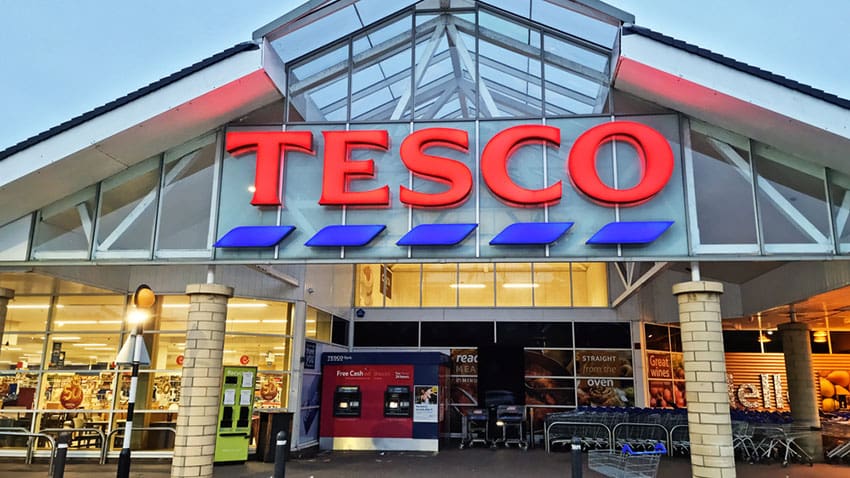
Weather trumps the World Cup at the till, says Tesco as growth cools
Business

Weather trumps the World Cup at the till, says Tesco as growth cools

by June 18, 2026

A washout spring has done more damage to Britain’s supermarket tills than any World Cup win, according to the boss of Tesco, after the country’s biggest retailer saw UK sales growth more than halve over a quarter blighted by rain and the fallout from the Middle East conflict.

Ken Murphy, chief executive of Tesco, said the grey, wet conditions that dominated much of this spring, set against a long run of sunshine a year earlier, had weighed on shopping habits far more heavily than either the football or the Iran war, even if the latter had created “ongoing uncertainty for many households”.

“The biggest impact on the market would be the weather,” Murphy said, with sunshine encouraging households to “eat together more, celebrate more and spend more on groceries”. On the tournament itself, he was warmer still: “It will be fantastic for the country if [England and Scotland] did well. It would give the country a real lift.”

There were, at least, flashes of the feel-good factor in the numbers. Sales through Tesco’s Whoosh rapid-delivery service jumped 40% around the England-Croatia game on Wednesday night, and climbed even faster in Scotland around Sunday’s win over Haiti. Sales of Irn-Bru, the fizzy drink beloved north of the border, rose by 50%, while canned cocktails surged 185% before the Haiti match. “The weather effect is the big difference,” Murphy insisted.

The retailer’s caution chimes with the wider read on the tournament. Football fans are expected to deliver a £267.7m boost to retail sales ahead of England’s second World Cup match on Tuesday evening, with close to £70m forecast to be spent in pubs and other venues, according to research from GlobalData for VoucherCodes. Industry forecasters have separately pencilled in a far larger windfall across the whole competition, with analysis published by The Grocer pointing to a record £2.9bn boost for UK retailers over the course of the tournament.

Yet the lessons of recent tournaments temper the optimism. Data from Euro 2024, in which England reached the final, suggests the overall sales uplift for supermarkets during a major championship is likely to be marginal. The market research firm Circana said cost-of-living pressures, heavy discounting and more time spent at home meant households were unlikely to spend “much more” than usual on food and drink. It is a pattern Business Matters has tracked before, with pubs, bookmakers and takeaways tipped to capture the lion’s share of the World Cup spend.

Tesco said comparable sales rose 1.8% to £13.4bn in the three months to the end of May, well below both the 4.2% logged in the previous quarter and the 2.3% growth City analysts had pencilled in. The figures were flattered by an 8.9% rise in online sales, with group sales up 1% to £16.8bn.

Murphy said consumer confidence remained low amid worries over the Middle East conflict, which has pushed up petrol prices and threatens to feed through to household energy bills later this year, though he stressed this had not yet translated into any significant change in shopping behaviour.

The chief executive added that growth had also been dampened by slowing grocery inflation, as the price of commodities such as coffee and cocoa eased and many food producers put measures in place to shield themselves from the earlier surge in energy costs. He said he did not expect grocery inflation to climb to the 9% levels suggested by some industry bodies, and that pump prices were “falling as we speak” amid hopes of a lasting peace deal between the US and Iran. The sensitivity of the basket to the seasons is well established, with a record May heatwave having lifted UK retail sales by 3.7% only weeks earlier.

Tesco said it had extended its pledge to match German discounter Aldi on leading lines to more than 2,000 of its smaller Express stores and had launched 520 new products, leaving it “well placed to build on our progress to date”. The renewed emphasis on price echoes the discounting battle the chain flagged heading into Christmas, as household budgets stayed under strain.

Not every corner of the business held up. Sales at Tesco’s Booker wholesale arm fell 3.2%, with takings from independent retailers and catering businesses sliding amid tough conditions on the high street.

Tesco, which holds its annual shareholder meeting later on Thursday, said it still expected to meet profit forecasts for the year, with analysts looking for around £3.25bn. Even so, the shares fell 2.4% in early trading. In April, the retailer warned of a possible dip in annual profits, which would mark the first fall since 2023. Reuters reported that the group’s Irish arm grew like-for-like sales by 3.3% to €967m over the same period, a reminder that the wider group is still expanding.

In the year to 28 February, profits rose 8.5% to £2.4bn as sales grew 4.3% to £66.6bn, including strong growth in the UK.

Read full article →

June 18, 2026
‘Tax break tart’: how hospitality plans to game the summer VAT cut on children’s meals
Business

‘Tax break tart’: how hospitality plans to game the summer VAT cut on children’s meals

by June 18, 2026

As operators ridicule the Chancellor’s giveaway, one Kensington venue is touting a £25 “kids” menu of burgundy snails and anchovy butter toast

Pubs and restaurants are expected to dream up increasingly inventive ways to milk a tax break on meals for under-18s, after a London venue unveiled a “children’s” menu featuring wild burgundy snail salad and anchovy butter toast.

Rachel Reeves last month announced a temporary cut in VAT on children’s meals, from 20 per cent to 5 per cent, running between 25 June and 1 September. The reduction forms part of a “Great British summer savings scheme” pitched as relief for hard-pressed venues and a sweetener for families. – Business Matters has explained how the Great British summer savings scheme works here.

The Chancellor flagged the policy in a video address to last week’s UKHospitality trade conference, where it landed to a notably muted reception.

Afterwards, senior figures across the trade added their voices to a growing chorus of derision, branding the scheme “laughable” and contrasting it with the roughly £5bn in extra costs piled onto pubs, bars, hotels and restaurants since Labour returned to power in 2024.

Chris Jowsey, chief executive of the 1,300-strong pub group Admiral Taverns, called the measure a “joke”, arguing that the resulting discount was “so small it’s embarrassing” and would do nothing for pubs that do not serve food.

He likened the VAT cut to the pandemic-era rules that, at one point, effectively allowed venues to serve alcohol only if it arrived alongside a scotch egg. “I suspect you’ll get some enterprising interpretations of children’s menus,” he said.

One restaurant in Kensington, in affluent west London, has already worked out how to wring maximum value from the policy.

The Blue Stoops has launched a £25 menu aimed at any “children” with an appetite for wild burgundy snails with bacon, anchovy butter toast, and beef and oyster pie. The line-up includes a pudding christened The Tax Break Tart. A non-alcoholic beer is bundled in, meaning the entire package qualifies for the summer reduction from 20 per cent to 5 per cent.

“We’re not expecting queues of children demanding snails and anchovy toast, but it has started the right conversations in the pub about why VAT support for hospitality needs to go much further,” the venue said.

Crucially, restaurants and pubs are under no obligation to verify that anyone ordering a discounted children’s meal is in fact a minor.

Clement Ogbonnaya, who owns the Prince of Peckham in south London, dismissed the discount as a “token gesture” that would achieve little without a permanent cut to the headline rate. “We’re all going to be faking our IDs to show we’re under 18,” he joked.

At the UKHospitality conference, operators lined up behind a call to slash VAT on hospitality from 20 per cent to 10 per cent. A parliamentary petition backing the move has already gathered more than 200,000 signatures, and can be found on the UK government petitions site. The campaign is supported by celebrity chefs including Tom Kerridge and Yotam Ottolenghi, and by the potential Labour leadership contender Andy Burnham, who has thrown his weight behind a hospitality VAT cut. Estimates of the annual cost to the Treasury range from about £10.5bn to £13bn.

The case rests partly on international comparison. While the UK rate sits at 20 per cent, the European average is 12.8 per cent. France, Spain and Italy all levy 10 per cent, and Germany charges 7 per cent. UKHospitality, which is co-ordinating the campaign, argues the gap leaves British venues at a structural disadvantage.

In her video message, Reeves insisted the government was backing the industry. The reception on the conference floor suggested otherwise. The hospitality investor and former Dragons’ Den panellist Sarah Willingham told delegates that when the Chancellor described Labour as pro-growth, she “nearly spat out my water”. The chief executive of Nightcap, owner of the Dirty Martini and Piano Works chains, described the UK investment climate as a “shitshow”.

Operators, grappling with soaring energy bills in the fallout from the Iran war, have rounded on a string of Labour measures, among them the higher national minimum wage, increased national insurance contributions and changes to business rates. The squeeze is already showing in the closure data, with three pubs and restaurants now shutting every day as costs and tax rises bite.

“They say they’re doing it for workers, but what they’re doing is making it impossible to employ workers because it’s so expensive,” said Matt Francis, owner of the Planet of the Grapes wine bar chain in London. “They think all people who own a business are driving around in a Ferrari with wedges of cash in our pocket.”

Francis added that he had only just repaid a government loan taken out when he was forced to close during the pandemic. “My reward is to pay even more tax. I will never vote for them again.” Of the summer discount, he was blunt: “We’ve got to the point where it’s laughable, not funny. And there’s a big difference.”

A government spokesperson said: “Businesses across the country have welcomed the Great British summer savings scheme, which will slash VAT from 20 per cent to 5 per cent on children’s meals, cinema and theatre tickets, and family attractions this summer. This will help families enjoy days out for less while boosting footfall for businesses across the hospitality and leisure sector.

“We’re also backing hospitality by reforming business rates, including a £4.3bn support package to limit bill rises, capping corporation tax at 25 per cent, cutting red tape and taking action on the cost of living. We have the right plan to grow the economy and support families and businesses with rising costs.”

Read full article →

June 18, 2026
Peers warn UK cannot afford to drag its feet on sterling stablecoin rules
Business

Peers warn UK cannot afford to drag its feet on sterling stablecoin rules

by June 3, 2026

The House of Lords has told the Bank of England and the FCA to keep to their timetable on stablecoin regulation, arguing that further delay will hand the digital payments race to Washington and Brussels, and shut British SMEs out of a fast-moving market.

Britain’s stablecoin moment has, in the view of peers, finally arrived, and the regulators must not fluff it. In a report published this week under the unsentimental title Stablecoins: waiting for regulation, the cross-party House of Lords Financial Services Regulation Committee has urged the Bank of England, the Financial Conduct Authority and HM Treasury to stick rigidly to their published timetable, warning that any slippage will entrench the dominance of dollar-backed tokens and leave UK challenger banks, payment firms and small businesses on the wrong side of an emerging global infrastructure.

The committee, chaired by the Conservative peer Baroness Noakes DBE, was unsparing in its assessment of how far the UK has fallen behind. “The global stablecoin market is dominated by US dollar stablecoins and evolved to serve cryptoasset trading,” she said. “New uses for stablecoins are emerging and regulators globally are setting up regulatory regimes. The UK is lagging behind compared with the US and the EU but is now moving in the right direction.” The message to Threadneedle Street and Stratford was, in effect: get on with it.

A sterling stablecoin, a digital token pegged one-for-one to the pound and backed by safe, liquid assets, is presented in the report as a genuine opportunity for the City and for the wider economy. Peers point to faster, cheaper settlement, programmable payments that could automate routine SME treasury tasks, and a broader stablecoin services ecosystem that could generate fee income for British banks, custodians and fintechs. With the UK’s existing depth in capital markets and a mature regulatory culture, a credible GBP token could find a willing audience well beyond the crypto trading floor.

But the committee is equally candid about the risks. Stablecoins, peers warn, carry implications for financial stability, the disintermediation of traditional deposit-takers and the protection of consumers who may not fully understand what sits behind a digital token. The use of stablecoins for illicit finance, particularly via unhosted, self-custody wallets, is highlighted as a serious global concern that British policymakers cannot wish away.

The committee broadly supports the approach taken in the Bank of England’s November consultation on a regulatory regime for sterling-denominated systemic stablecoins, including the principle that issuers must hold backing assets one-for-one and the offer of a Bank backstop lending facility. What worries peers is the fine print.

Three areas in particular drew sharp criticism. First, the Bank’s proposal that systemic issuers hold at least 40 per cent of their backing assets in unremunerated deposits at Threadneedle Street, which the committee says risks making the UK regime “an international outlier” and a commercially unattractive one at that. Second, the suggestion that pre-emptive holding limits be imposed on stablecoin balances, which peers fear could throttle a market before it has had a chance to demonstrate either its risks or its uses. Third, the proposed restrictions on commercial banks issuing stablecoins under their own branding through ordinary subsidiaries, which the report says could shut high-street lenders out of an obvious adjacent market.

The committee’s preferred approach is what it terms a “use-case agnostic” framework: rules robust enough to mitigate financial stability and consumer protection risks, but flexible enough that they do not pre-judge which applications, wholesale settlement, e-commerce, cross-border B2B payments, micro-transactions, will turn out to matter. Crucially, peers warn the Bank and FCA not to apply “a more severe risk lens” to stablecoins than they do to existing payment rails. That is a pointed reminder that card networks, faster payments and correspondent banking carry risks of their own that have long been managed rather than designed out.

For small and medium-sized businesses, the practical stakes are considerable. Programmable sterling tokens could automate supplier payments, settle export invoices in seconds rather than days, and remove a layer of foreign-exchange and intermediary cost that currently sits between British exporters and overseas customers. Peers’ insistence on regulatory certainty matters because, without it, UK fintechs developing those tools are likely to redomicile or build on dollar rails, a familiar story for anyone who watched the debate over Britain’s ambition to compete with the US as a global crypto hub play out over recent years.

The FCA, meanwhile, is pressing on with a broader conduct regime for digital assets, against the backdrop of falling retail crypto ownership and rising institutional interest, as our recent coverage of the regulator’s preparations for new digital asset rules noted. The Lords’ report is, in effect, an attempt to make sure the prudential and conduct workstreams reinforce rather than undermine each other.

The most pointed political signal in the report concerns unhosted wallets, self-custody digital wallets that sit outside the regulated perimeter and have become a focus of anti-money-laundering attention in both Washington and Brussels. Peers have asked HM Treasury, working with the Bank and the FCA, to assess whether existing UK law is sufficient to detect and deter their misuse, and have explicitly invited ministers to legislate to restrict their use if it is not. That is a notable shift in tone for a committee otherwise inclined towards encouraging innovation, and reflects how seriously Westminster is now taking the illicit-finance risks brought into sharp relief by the Trump administration’s enthusiastic embrace of the sector, as charted in our reporting on the US ‘crypto week’ and the rise of bank-issued stablecoins.

The Lords’ message is straightforward, even if the underlying regime is anything but. The UK has a narrow window in which to set rules that are credible, competitive and durable. Get the calibration wrong on backing assets, holding limits or bank participation and a sterling stablecoin market will simply fail to emerge, ceding ground to MiCA-compliant euro tokens and an increasingly liberal US regime. Get it right and Britain has a genuine shot at hosting a stablecoin ecosystem that serves not only City wholesale markets but the wider SME economy that depends on cheap, fast and reliable payments.

As Baroness Noakes put it: “Regulation needs to allow innovation while ensuring that risks are effectively mitigated. The shape of any UK stablecoin market will be strongly influenced by the direction of the regulatory regime, and so it is important that the regulators get this balance right.”

Further details of the inquiry, including the full report and the evidence submitted by industry, are available on the UK Parliament’s Financial Services Regulation Committee page.

Read more:
Peers warn UK cannot afford to drag its feet on sterling stablecoin rules

June 3, 2026
Seventh carbon budget: Britain bets £105bn Net Zero economy can shield SMEs from the next fossil fuel shock
Business

Seventh carbon budget: Britain bets £105bn Net Zero economy can shield SMEs from the next fossil fuel shock

by June 2, 2026

Britain’s small and medium-sized businesses are being placed at the centre of the most consequential climate decision since the Climate Change Act, after the government tabled a Seventh Carbon Budget that would cap UK emissions at 535 million tonnes of CO2 equivalent between 2038 and 2042, an 87 per cent reduction on 1990 levels.

Announced on Tuesday by the Department for Energy Security and Net Zero, the proposed limit mirrors to the megatonne the advice handed down by the independent Climate Change Committee, and lands as Britain absorbs its second fossil fuel price shock in five years, this time triggered by the war in Iran rather than Russia’s invasion of Ukraine.

For SME owners watching their energy bills lurch upwards once more, the political framing is unusually direct. Energy Secretary Ed Miliband cast the budget as a defensive measure for “family and business finances”, arguing that homegrown clean power is the only credible route off what he called the “rollercoaster” of global hydrocarbon markets. Half of all UK recessions since 1970 have been triggered by fossil fuel shocks, according to Treasury-cited analysis published alongside the announcement.

The economic prize, on the numbers tabled by ministers, is substantial. An independent report from the Energy and Climate Intelligence Unit, with analysis from CBI Economics, calculates that the UK’s net zero economy now generates £105 billion in gross value added and underpins more than one million jobs, and crucially for Business Matters readers, more than 96 per cent of the 23,000 firms operating in the sector are small or medium-sized enterprises.

Those businesses are, on the data, materially more productive than the wider economy. Net zero employers generate £119,300 of economic value per full-time job, around 48 per cent above the UK average, and pay workers an average of £43,142 — comfortably above the national median. Wages across the sector run 11 per cent higher than the UK average, according to the Aldersgate Group.

Since July 2024, more than £90 billion of private capital has been committed to UK clean energy projects, from carbon capture clusters in Teesside to the Sizewell C nuclear plant on the Suffolk coast. National Grid has separately confirmed a record £70 billion network investment plan covering 2026 to 2031, the infrastructure backbone on which much of the Seventh Carbon Budget depends.

For owner-managers, the practical reading of Carbon Budget 7 is in the unit economics, not the megatonnes.

Government modelling indicates families installing solar panels can save up to £500 a year, while electric company cars can save up to £1,400 annually to run — and new EVs are now, on average, cheaper to buy outright than petrol equivalents. March saw the highest monthly solar deployment in over a decade alongside a record month for EV sales, suggesting the consumer choice-led adoption curve baked into the CCC’s pathway is already steepening.

The £15 billion Warm Homes Plan, billed as the largest domestic upgrade programme in British history, opens a sizeable addressable market for installers, electricians and building services SMEs — the very segment that has long argued, as covered previously in Business Matters, that net zero is as much an SME commercial opportunity as a compliance burden.

On the supply side, by 2050 the UK could cut its reliance on fossil fuels from roughly three-quarters of total energy demand today to around 15 per cent, avoiding an estimated £445 billion in fossil fuel spending over the next 25 years.

The industry reception has been notably warm. Dhara Vyas, chief executive of Energy UK, said certainty from the Climate Change Act and successive carbon budgets had already unlocked “billions of pounds” of long-term investment, and that more than half of UK electricity now comes from low-carbon sources.

Ben Martin, policy manager at the British Chambers of Commerce, said the budget “provides greater certainty” for innovative SMEs developing low-carbon technologies, while Verity Davidge, director of policy at Make UK, framed it as a chance to “modernise industrial processes” so British manufacturers can compete on an “increasingly carbon-free international stage”.

There is, however, a clear demand from business for a credible delivery plan. Rt Hon Lord Alok Sharma, chair of the UK Transition Finance Council, welcomed the headline target but pressed ministers to act on the council’s recommendations to channel finance into hard-to-abate sectors. Rachel Solomon Williams, executive director at the Aldersgate Group, similarly called for a plan that sets out “clearly what action will be taken across different sectors”, particularly around the surging electricity demand from heating, transport and industry.

That delivery plan will, the government confirmed, be published “as soon as is reasonably practical” after Parliament approves the budget.

The Seventh Carbon Budget arrives into a more contested political climate than its predecessors. Mr Miliband used the announcement to draw a sharp dividing line, accusing critics who “want to stick their heads in the sand” of asking British children to “face the consequences of climate breakdown”. The Energy Secretary has been increasingly forthright in defending the net zero agenda against political headwinds, framing it as a jobs and energy-security story rather than an environmental one.

For investors and SMEs alike, that policy contestation is itself a risk premium. As James Alexander, chief executive of UKSIF, put it, “investors need certainty to allocate billions of pounds of capital to major low-carbon industries”. Nick Mabey, chief executive of E3G, was blunter still: ripping up two decades of climate policy, he warned, would be “a threat to British security and competitiveness”.

For now, the Seventh Carbon Budget delivers what most of UK plc has been asking for, a long-range, evidence-based, science-led trajectory that takes the country to within touching distance of net zero by 2050. The harder question, as ever, is whether the delivery plan that follows will match the ambition of the target, or whether the next five years will be defined less by megatonnes than by megawatt connection queues.

The Office for Budget Responsibility has been clear on the bottom line: the cost of climate damage is rising; the cost of the transition is falling. For SMEs deciding whether to invest in solar, switch their fleet to electric or move into the low-carbon supply chain, the Seventh Carbon Budget is the strongest signal yet that the policy direction will not reverse.

Read more:
Seventh carbon budget: Britain bets £105bn Net Zero economy can shield SMEs from the next fossil fuel shock

June 2, 2026
“Rearranging deckchairs on a heavily taxed ship”: business owners round on Labour’s tax-and-spend mindset
Business

“Rearranging deckchairs on a heavily taxed ship”: business owners round on Labour’s tax-and-spend mindset

by June 2, 2026

Britain’s small business community has reacted with thinly veiled fury to the disclosure that Work and Pensions Secretary Pat McFadden privately told Lord Mandelson that every Labour meeting was consumed by the question of “who can we tax in order to pay benefits to others”, with one CEO declaring the country is “rearranging deckchairs on a very expensive, heavily-taxed ship”.

The message, sent in May 2025 when McFadden was running the Cabinet Office, was among more than 1,000 pages of correspondence released following the Humble Address compelling disclosure of communications with the former US ambassador. In it, the minister bluntly tells Mandelson that his colleagues “are asking the wrong questions”.

A spokesperson for McFadden said the minister had “fully complied with the Humble Address and handed over all messages”, adding that his only contact with Lord Mandelson since the latter left government had been to urge him to “think about the victims in all this and apologise to them”.

For business owners contending with the highest UK tax burden in seven decades, however, the leaked exchange has confirmed a long-held suspicion: that the Treasury sees enterprise as a cash machine rather than an engine of growth.

Paul Denley, chief executive of London-based Oakham Wealth Management, said the comment reflected a default political reflex that was strangling investment.

“Every government inherits problems. The test is whether it reaches for the same tired tools or has the imagination to do something different. Too often, the focus seems to be on redistribution rather than growth, innovation and wealth creation,” he said.

“The concern is that taxation has become the default policy response to almost every challenge. Successful economies do not become more prosperous by continually redistributing a fixed pool of wealth. They grow by encouraging enterprise, investment and productivity.

“At some point, the conversation has to shift from how we divide the pie to how we make it bigger. Otherwise, we risk managing decline rather than creating prosperity. Without a stronger focus on growth, we are simply rearranging deckchairs on a very expensive, heavily-taxed ship.”

His unease is rooted in hard numbers. The Office for Budget Responsibility now puts the tax take at a 70-year high of around 37 per cent of GDP, the steepest level since records began in 1948 – a trajectory that has only sharpened since Rachel Reeves signalled fresh tax rises to plug a £40bn Budget black hole.

Graham Nicoll, chartered financial planner at NCL Wealth Partners, said the McFadden message would resonate with anyone running a small enterprise.

“Pat McFadden’s reported comment reflects a frustration many business owners recognise, the perception that, as the government faces fiscal pressure, businesses, entrepreneurs, investors and higher earners are often seen as the first source of additional tax revenue,” he said.

“The concern is not necessarily about paying tax, but about the cumulative impact of repeated tax increases and policy changes that impact confidence, the attractiveness of investing and growth in the wider economy. Small businesses create jobs, generate tax receipts and drive local economies.

“By exacerbating a system that rewards inactivity and can encourage unemployment, the balance is wrong. The government needs to focus on promoting people to upskill, to aspire to contribute and to get rewarded – and on driving growth rather than stifling it.”

That argument is buttressed by the latest Office for National Statistics figures, which show more than a million 16- to 24-year-olds are not in education, employment or training, with youth unemployment running at 16.2 per cent – the highest rate since 2015.

Tony Redondo, founder of Newquay-based Cosmos Currency Exchange, was unsparing in his assessment of the administration’s record so far.

“This neatly encapsulates the economic illiteracy of this government. They are not in the least concerned with wealth creation,” he said.

“The cost of this myopia is stark: a record number of young people not in work or education, record-high taxation, an economy on its knees, unemployment at 5 per cent and rising, and government borrowing costs that recently reached levels exceeding those that triggered the Liz Truss meltdown of 2022.

“The Tories deserved a good kicking at the last election, but the country does not deserve this shambolic excuse for a government. Two years into Labour’s first term in office in 15 years, they are behaving like a Manchurian candidate, hell-bent on destroying the UK from the inside out.”

Michelle Lawson, director of Fareham-based Lawson Financial, focused on the impact on those who keep the lights on.

“This makes me sick to the core. Millions of people in the UK of all ages get up every day to go to work, and some have multiple jobs to pay the bills,” she said.

“Labour bleat on with their rhetoric on the importance of business but this shows their lack of knowledge and understanding of the basics. In two years they’ve managed to do what no other government has done, become the most unpopular and the most despised, yet the Prime Minister still hasn’t got the memo.

“With all the notes in these papers, there must be plenty to just give him the push he and the Chancellor need. The damage they have done is still repairable but comes with other concerns. Rather than taxing just about every possible morsel, looking at the systemic root cause of these problems and a good financial review of their spending may help. Another fine mess this shambolic lot have put us in.”

Her view chimes with that of the Federation of Small Businesses, which has spent recent months lobbying the Treasury over the threshold freeze that swept 104,000 small firms into the business rates net in April 2026.

Steven Greenall, director of Greenall Estate Planning, offered the bluntest verdict of all: “Labour are doing their utmost to talk themselves out of winning the next election.”

For Sir Keir Starmer’s government, the political risk is that the McFadden message becomes shorthand for a Whitehall mindset that asks reflexively who to tax next rather than how to grow the economy out of trouble. For Britain’s SME owners – the constituency Labour spent two years courting in opposition – the dossier reads less as a leak and more as confirmation.

Read more:
“Rearranging deckchairs on a heavily taxed ship”: business owners round on Labour’s tax-and-spend mindset

June 2, 2026
Zero-hours contract reforms risk pushing bosses towards more insecure work, warns CIPD
Business

Zero-hours contract reforms risk pushing bosses towards more insecure work, warns CIPD

by June 2, 2026

Britain’s flagship overhaul of zero-hours contracts could end up doing the very opposite of what ministers intend, the country’s leading HR body has warned, with employers likely to lean more heavily on self-employed contractors and fixed-term arrangements if the new rules prove too unwieldy to administer.

Responding to the Government’s consultation on its zero-hours contract reforms, a central plank of the Employment Rights Bill that recently cleared its final parliamentary hurdle, the Chartered Institute of Personnel and Development (CIPD) cautioned that complex compliance demands could ultimately push more workers into looser, less secure forms of employment.

Ben Willmott, head of public policy at the CIPD, said that while the institute supported the principle of protecting workers from one-sided flexibility, the practical detail of the reforms would make or break their success.

“Well-managed zero-hours contracts provide welcome flexibility for employers and for people who want to work but cannot commit to fixed hours, including students, carers and those managing health conditions,” Willmott said.

He stressed that the reference period used to calculate the guaranteed minimum hours owed to a zero-hours worker would be a critical battleground. “A longer reference period will be easier for employers to manage, but even with this, the new measures are likely to be extremely complex and challenging to comply with, particularly for small firms or those with fluctuations in demand.”

According to the Government’s own factsheet on zero-hours contracts, the reference window is expected to be set at around 12 weeks, although the figure remains subject to consultation. Employer groups have been pressing for a longer horizon to smooth out the seasonal peaks and troughs that characterise sectors such as hospitality, retail and care.

Beyond the question of guaranteed hours, Willmott pointed to a second compliance landmine: the requirement to give workers reasonable advance notice of shifts.

“This is only one headache for employers,” he said. “The challenge of providing reasonable advanced notice of shifts is also likely to prove difficult and require caveats to allow for issues like sickness absence.”

The concern echoes wider business worries that the legislation, while well-intentioned, has been drafted with limited regard for the operational realities of running a small or medium-sized firm — anxieties that have already prompted a third of employers to scale back hiring plans according to fresh CIPD research.

Willmott’s sharpest warning, however, was reserved for the law of unintended consequences. If the final regulations prove unworkable, he argued, employers will simply route around them.

“If the final regulations are too difficult to manage, employers will simply find other ways to achieve workforce flexibility. They are likely to rely more on self-employed contractors and fixed-term contracts, for example, potentially resulting in more rather than less insecure employment.”

That outcome would be particularly damaging for young people, who have historically been one of the biggest beneficiaries of zero-hours arrangements. Such contracts have long allowed students and early-career workers to fit paid work around studies, training or caring duties.

“This would also damage opportunities for young people who particularly benefit from zero-hours contract arrangements because they enable them to balance work while studying,” Willmott added.

The CIPD is among a growing chorus of business voices, covered in detail in Business Matters’ guide to the new Employment Rights Bill, calling on ministers to use the consultation process to soften rough edges rather than rush implementation. With staged commencement now stretching into 2027, Whitehall has time to listen. Whether it does so will determine if the reforms become a landmark for fairer work, or a cautionary tale of policy that achieved precisely the opposite of its aim.

Read more:
Zero-hours contract reforms risk pushing bosses towards more insecure work, warns CIPD

June 2, 2026
Business rates rethink demanded as 104,000 small firms swept into tax net
Business

Business rates rethink demanded as 104,000 small firms swept into tax net

by June 2, 2026

The Federation of Small Businesses says a decade-long freeze on the relief threshold, coupled with backdated changes hitting shared offices, is “directly undermining” the government’s growth agenda.

More than 100,000 small companies have been pulled into the business rates regime for the first time, prompting the country’s largest small business lobby group to demand an urgent rethink from the Treasury.

The Federation of Small Businesses (FSB) has written to Daniel Tomlinson, exchequer secretary to the Treasury, urging ministers to lift the threshold at which premises become liable for the property tax, and to reverse a separate change in methodology that is leaving start-ups and micro-businesses in shared offices nursing unexpected bills running into thousands of pounds.

By piling further costs on the smallest firms, the FSB warned, the existing regime “directly undermines the government’s own growth ambitions”, a pointed reminder that the chancellor’s pro-growth rhetoric is being tested on the high street as much as in the City.

Business rates are levied on most commercial properties in England and are calculated on a building’s rateable value, an estimate of its open-market annual rent set by the Valuation Office Agency (VOA). Single-site small firms pay nothing if their rateable value sits below £15,000, a threshold that has not budged in ten years.

That decade of inertia, combined with the VOA’s latest revaluation cycle, means an estimated 104,000 small business premises were dragged inside the rates regime when the new financial year began in April. Before taking office in 2024, Labour had floated raising the threshold for small business rates relief from £15,000 to £25,000. Two years on, the FSB wants the chancellor to honour the spirit of that pledge.

Lifting the bar, the group argues, would predominantly benefit firms outside the capital, where property values keep most premises below the £25,000 mark. “This would take thousands of businesses out of paying the regressive pre-profit tax that we know holds back growth,” the FSB said, “and these are primarily across the north-east, north-west, Yorkshire and south-west, where rateable values, and prosperity levels, are lower.”

The FSB’s letter also flags what it calls an “escalating problem” for firms based in serviced and shared offices, typically start-ups and micro-businesses that have driven much of the post-pandemic recovery in regional cities.

A VOA change to how rateable values are calculated for such buildings, introduced in April and applied retrospectively, has stripped many tenants of the relief they previously claimed. Some are now staring at backdated demands running to several thousand pounds, an issue that has already drawn warnings from operators that the reclassification could put serviced offices at risk across regional markets.

“If this change of methodology from the VOA continues unchecked, the impact would be concentrated overwhelmingly on micro-businesses and SMEs in second cities and regional economies,” the FSB warned, characterising the change as a quirk of how rules are being applied rather than a “deliberate intended policy decision by government ministers”. The group wants officials to revert to the previous methodology.

Calls for wholesale reform of business rates are scarcely new. Pressure has been building from across the economy, most recently from manufacturers, who are bracing for a £1 billion rates bombshell as April’s revaluation feeds through to factory bills, and from hospitality operators who saw Rachel Reeves accused of imposing a “nice pub tax” earlier this year.

The chancellor has committed to permanent reform, but a comprehensive overhaul remains stuck in the long grass. The issue continues to dog ministers, with the King’s Speech in 2026 doing little to allay business concerns that the political will for a meaningful redesign of the tax is still missing.

The FSB’s intervention echoes earlier warnings from the lobby group that the rates system has become an “indefensible” disincentive to invest. For owners of corner shops, salons and small workshops, the maths is simple: a tax levied before a penny of profit has been earned is a tax on ambition.

A Treasury spokesman said the government had “the right economic plan” and pointed to the £4.3 billion set aside to support businesses facing higher rates bills. For the 104,000 firms now opening a brown envelope for the first time, that figure may feel rather more abstract than the bill on the desk.

Read more:
Business rates rethink demanded as 104,000 small firms swept into tax net

June 2, 2026
In cod we trust: industry urges ministers to back Britain’s chippies before the high street loses its national dish
Business

In cod we trust: industry urges ministers to back Britain’s chippies before the high street loses its national dish

by June 2, 2026

For the better part of a century, the fish and chip shop has been the most reliable barometer of British high-street health. When the chippies are thriving, the parade is alive. When they are boarded up, it is rarely a sector-specific problem. Right now, according to one of the trade’s most experienced operators, the chippies are battening down the hatches at precisely the moment Westminster should be helping them grow.

That is the verdict of Danny Hennesy, a three-decade veteran of the trade and owner of Mandens, the UK’s leading broker for buying and selling fish and chip shops. His warning is blunt: ministers are quietly squandering an opportunity to back one of Britain’s most resilient SME sectors at the very moment buyer appetite is at its highest in years.

“There has never been more interest in the sector, but it’s getting harder to run these businesses,” Hennesy told Business Matters.

That interest is visible in the listings. There are currently 338 fish and chip shops on the market across the UK via BusinessesForSale.com, pointing both to a maturing generation of owner-operators preparing to step back and a sizeable cohort of would-be entrepreneurs eyeing the trade as their escape route from corporate life. Whether those deals translate into thriving, reinvested businesses depends almost entirely on the trading conditions the next owners inherit.

The arithmetic of the fish and chip trade has always been unforgiving, but the past 18 months have stretched even the most well-run shops. The industry generates an estimated £1.2 billion a year and serves hundreds of millions of portions annually through a network represented by the National Federation of Fish Friers. Yet operators are being hit from every direction at once.

April’s increase in employer National Insurance Contributions, rising from 13.8 per cent to 15 per cent and biting from a far lower secondary threshold, has hammered margins in a sector where staffing is the second-largest line cost after raw materials. Business Matters has previously reported that employers’ NIC bills have overshot Treasury forecasts by £28 billion, with hospitality among the hardest-hit sectors.

Energy bills remain stubbornly high. And the price of the white fish that defines the menu, cod and haddock, is being pushed up again by tensions in the Middle East. Reuters and others have documented how fishing fleet diesel costs have doubled on some routes, with the conflict feeding directly into the price of a Friday-night supper.

“Fish and chips is one of the most resilient food sectors in the UK,” Hennesy said. “It’s part of our DNA, when times are tough, people still come back to it because it’s familiar, affordable and reliable. But costs are rising from every angle, energy, raw materials, staffing, and global events are now feeding directly into the price of running a shop. That’s stopping owners from investing and growing.”

The behavioural shift Hennesy describes is the issue ministers should care most about. Operators who would normally be refurbishing, taking on second sites or upgrading energy-hungry fryers are instead conserving cash. That caution echoes wider sector data: Business Matters has reported that the hospitality tax raid is now forcing some pubs and restaurants to shut one day a week simply to protect margins.

“We should be seeing growth, instead, people are just trying to hold on,” Hennesy said. “Without support, more shops will close, and that would be a real loss to the high street.”

The loss would not just be sentimental. Fish and chip shops are anchor tenants in thousands of secondary parades that no national chain will ever colonise. When a chippie shuts, the footfall it generates for the newsagent two doors down goes with it, a dynamic that helps explain why high street closures are projected to accelerate sharply as the business-rates relief regime tightens.

For all the pressure, the underlying economics remain attractive, which is precisely why buyer demand has not collapsed. Well-run shops can deliver margins of around 28 per cent. Many turn over £8,000 to £10,000 a week. Top-performing sites push past £15,000, and a handful of marquee chippies clear more than £1 million a year.

Andrew Markou, chief executive and co-founder of BusinessesForSale.com, says that profile is exactly what is keeping mid-career career-changers in the market.

“In uncertain times, people look for businesses that offer stability and steady demand, and fish and chip shops are a classic example,” he said. “The demand is there. The question is whether the wider environment allows the sector to grow, or simply forces it to stand still.”

Hennesy’s frustration is not that the sector lacks resilience. It is that resilience is being mistaken for a reason to do nothing. He wants ministers to recognise that targeted relief, on energy, on the NIC threshold for hospitality SMEs, on business rates for independents, would unlock investment that is currently being deferred.

“This industry has survived everything, recessions, rising costs, changing habits. It will survive this too,” he said. “But with the right backing, it could do far more than just survive, it could lead growth in the fast food sector.”

For now, the chippies remain open, the queues remain steady and the national dish remains, as it always has, a low-cost ritual that outlasts almost everything thrown at it. The question for the Treasury is whether it is content to let one of Britain’s most reliable SME success stories merely endure — or whether, with a few well-aimed measures, it is willing to let it grow.

Read more:
In cod we trust: industry urges ministers to back Britain’s chippies before the high street loses its national dish

June 2, 2026
Jeremy Hunt may have just written the growth manual Britain has been waiting for
Business

Jeremy Hunt may have just written the growth manual Britain has been waiting for

by June 2, 2026

In Can We Be Rich Again? the former chancellor delivers a refreshingly self-aware diagnosis of what has gone wrong with the British economy, and a costed prescription that SMEs, in particular, ought to read with interest.

He could so easily have phoned it in. A bulky political memoir, a couple of nicely judged knives slipped between the shoulder blades of former Cabinet colleagues, an amusing yarn or two from Davos and the IMF spring meetings, and a discreet bit of humble-bragging about steadying the ship after the Truss-Kwarteng mini-Budget. Sir Jeremy Hunt, now liberated from the red box and with rather more time on his hands, could have produced precisely the sort of worthy but unreadable volume that gathers dust on the shelves of every Westminster bookshop.

To his very considerable credit, he has not. In Can We Be Rich Again?, the former chancellor has instead set himself the rather harder task of working out, with disarming honesty about his own role in the muddle, what has gone so badly wrong with the British economy, and how it might still be put right.

A question that should not feel provocative

That the title itself reads as slightly cheeky is, in truth, a damning indictment of where we have arrived. Rich? In an economy where output per person has barely shifted since the eve of the pandemic, the Office for Budget Responsibility’s March 2026 outlook puts real GDP per head growth at an average of just 1.1 per cent a year between now and 2030, against the 2 per cent enjoyed before the financial crisis, the average voter has long since lowered the bar to “not visibly poorer than last year.”

Sir Jeremy will have none of it. “We still have a lot going for us,” he writes, with the breezy confidence of a man who has just remembered he is no longer responsible. Britain, he reminds the reader, retains the integrity of its institutions, robust property rights and a serious legal system. It is the most open of the major economies and houses the third-largest technology ecosystem on the planet, behind only the United States and China. Harness those advantages, he argues, and the British economy can grow again. The diagnosis chimes neatly with the IMF’s own 2026 Article IV concluding statement, which praised the broad direction of the government’s investment-and-reform agenda while warning that “credibility will ultimately hinge on sustained implementation.”

The eight-point plan, costed

What lifts the book above the standard centrist-Tory lament is that Sir Jeremy has done his homework. Each of his prescriptions is tested against an estimated effect on GDP, lending the manifesto a refreshing absence of magical thinking.

The two opening shots are familiar enough: bring taxes down, and adopt a new fiscal rule that compels debt to grow more slowly than output. Then come the supply-side reforms, eight of them, that form the spine of the book. Fix a welfare system that has parked too many working-age adults on long-term sickness benefit. Relax planning rules so that Britain can build something, anything, again. Drive public-sector productivity higher. Hand local mayors the powers and budgets to rebuild their regions. Embrace artificial intelligence rather than regulating it into irrelevance. Restart oil and gas production in the North Sea. Repair an education system that has spent decades failing the 50 per cent of school-leavers who do not go to university. And, perhaps closest to the heart of this magazine’s readership, properly encourage entrepreneurship.

Put the whole package to work, Sir Jeremy reckons, and Britain could add three percentage points a year to its growth rate, a compounded gain of around 20 per cent over a decade. That is not loose change. It is the difference between managed decline and a recognisably advanced economy. For founders and owner-managers, it is the difference between scaling and surviving, a tension Business Matters has chronicled at length in its coverage of SME expansion plans.

Quibbles, mostly minor

It is not difficult to pick at the detail. AI may, in time, prove less revolutionary than its loudest evangelists promise, although the early productivity numbers, Business Matters recently reported research suggesting SMEs deploying AI can unlock productivity gains of between 27 and 133 per cent, argue otherwise. Politicians have been promising to fix vocational training for the best part of a century, generally without troubling the outcomes.

More seriously, Sir Jeremy remains, in temperament, a pragmatic centrist. He instinctively underplays the ferocity of the resistance any reforming chancellor will encounter from what Liz Truss memorably christened “the anti-growth coalition”, that diffuse weave of judges, quangos, NGOs and Whitehall lifers known to its critics as “the Blob”. After five years of a Labour administration that has fed and watered that ecosystem with some enthusiasm, it will be denser, better funded and considerably more confident than it was when he occupied 11 Downing Street.

The book Hunt wishes he had been handed

These, though, are quibbles. Sir Jeremy is unlikely to return to office, and the book never pretends to be a Treasury-ready blueprint. Its real virtue is in marshalling, in one place and with proper analytical rigour, every credible lever available to revive British growth, and in making the unfashionable case that none of this is especially difficult. Read in the context of the optimism filtering back through Britain’s small business community, the message lands harder still: the country wants to grow; it just needs a government that lets it.

By the close of this decade, he warns, Britain will look less like an advanced economy than a developing one. The flipside, he points out with a wry smile audible in the prose, is that emerging economies have spent decades demonstrating that catch-up growth is largely a matter of copying what works elsewhere. “My analysis shows that delivering it may not be easy, but it is not impossible either,” he writes. “All the solutions have been tried in other countries with similar democratic constraints to ourselves.”

The most uncomfortable passage in the book is also the most revealing. “If that’s the answer, why on earth didn’t you do it when you had the chance?” Sir Jeremy asks himself, with the directness of a man who knows the question is coming. “The truth is that no one starting a job can ever know all the answers. In some ways, I wish I had been given this book on the day I became chancellor.”

Whoever inherits the Treasury in 2028 or 2029, and the polling suggests it will not be a Conservative, would do well to take him at his word. Can We Be Rich Again? is, despite itself, the most useful piece of economic writing produced by a former British chancellor in a generation. It deserves to be read, argued with, and, on most counts, acted upon.

Can We Be Rich Again? by Sir Jeremy Hunt is published by Swift at £25.

Read more:
Jeremy Hunt may have just written the growth manual Britain has been waiting for

June 2, 2026
  • 1
  • …
  • 9
  • 10
  • 11
  • 12

    Get free access to all of the retirement secrets and income strategies from our experts! or Join The Exclusive Subscription Today And Get the Premium Articles Acess for Free

    By opting in you agree to receive emails from us and our affiliates. Your information is secure and your privacy is protected.

    Popular Posts

    • A GOP operative accused a monastery of voter fraud. Nuns fought back.

      October 24, 2024
    • Trump’s exaggerated claim that Pennsylvania has 500,000 fracking jobs

      October 24, 2024
    • American creating deepfakes targeting Harris works with Russian intel, documents show

      October 23, 2024
    • Tucker Carlson says father Trump will give ‘spanking’ at rowdy Georgia rally

      October 24, 2024
    • Early voting in Wisconsin slowed by label printing problems

      October 23, 2024

    Categories

    • Business (118)
    • Politics (20)
    • Stocks (20)
    • World News (20)
    • About us
    • Privacy Policy
    • Terms & Conditions

    Disclaimer: EyesOpeners.com, its managers, its employees, and assigns (collectively “The Company”) do not make any guarantee or warranty about what is advertised above. Information provided by this website is for research purposes only and should not be considered as personalized financial advice. The Company is not affiliated with, nor does it receive compensation from, any specific security. The Company is not registered or licensed by any governing body in any jurisdiction to give investing advice or provide investment recommendation. Any investments recommended here should be taken into consideration only after consulting with your investment advisor and after reviewing the prospectus or financial statements of the company.

    Copyright © 2025 EyesOpeners.com | All Rights Reserved