
Eyes Openers
  • World News
  • Business
  • Stocks
  • Politics
  • World News
  • Business
  • Stocks
  • Politics

Eyes Openers

Category:

Business

Business leaders demand end to ‘drift and delay’ as Starmer exit leaves UK braced for change
Business

Business leaders demand end to ‘drift and delay’ as Starmer exit leaves UK braced for change

by June 23, 2026

Britain’s business leaders have called for stability and warned ministers against further tax rises after the resignation of Sir Keir Starmer left the UK staring down its seventh prime minister in a decade.

Reducing the cost of doing business, unlocking more long-term investment and keeping Ed Miliband out of the Treasury sit at the top of a corporate wishlist that company chiefs are now pressing on a government in transition.

Less than two years after Labour’s landslide victory under Starmer, firms are bracing for another bout of uncertainty. The worry, privately expressed by several senior figures, is that “everything will get gummed up for at least a few weeks”, with ministers effectively frozen out of decision-making while Whitehall waits for a new occupant of Number 10, most likely Andy Burnham.

Some bosses also voiced unease at the prospect of Miliband, the energy secretary, being promoted to chancellor in the next administration.

Financial markets largely took the news in their stride. Sterling rose 0.3 per cent against the dollar to $1.32 and ten-year gilt yields held broadly steady at 4.85 per cent. Traders had widely anticipated Starmer’s departure after Burnham won the Makerfield by-election last week, and the City has welcomed the outgoing mayor of Greater Manchester committing to the government’s fiscal rules, the framework that governs day-to-day spending and borrowing.

Calm pricing has not translated into calm boardrooms, however. Big-business lobbyists are lining up calls with senior officials this week, while investment banks are scheduling client discussions on how the latest reshuffle of Downing Street will redraw the political map, policy agenda and market outlook. It is a familiar pattern for firms that have already weathered repeated bouts of pre-Budget uncertainty and wavering confidence.

One business figure and Labour donor, speaking confidentially, said the “country is just desperate for direction. There really, really has to be a clear articulation of the commitments of whatever the new government is.”

They added: “If a new prime minister is going to succeed, he’s going to have to stick his neck out to commit to what is going to get sorted out very quickly and, frankly, be prepared to be judged on it in about 18 months. Top of the list would be law and order. Obviously illegal immigration and welfare reform, welfare is at crisis point.”

The same donor said they were “really happy to see the back of Starmer”, who “pretty much failed on every score”. Labour, they argued, had spent so long thinking about how to win power while saying “very little by way of commitments” that the prime minister “probably didn’t have a mandate to make some very tough decisions and get his party to fall in line. And that was one of his biggest mistakes.” The “lack of urgency”, they said, “was what was most shocking”.

Not everyone is convinced the change at the top is cause for celebration. Theo Paphitis, the former Dragons’ Den investor and owner of Ryman and Boux Avenue, cautioned that the “country needs to be careful what it wishes for. We don’t know what Andy’s policies are, or what he stands for.”

Rain Newton-Smith, chief executive of the CBI, whose members include BAE Systems, Tesco, Centrica and AstraZeneca, thanked Starmer for championing UK business and for his international leadership, but warned that the hard work was only beginning. “With geopolitical tensions high, the country now needs stability, confidence and a clear path to growth,” she said.

“The UK’s economic challenges will not disappear with a change of prime minister. The economy won’t fix itself while politicians look inwards. And you cannot tackle the cost of living without addressing the cost of doing business.”

That message echoes the CBI’s long-running warning that the burden on employers is nearing a tipping point, a theme that has run through repeated calls for ministers to hold the line on tax.

Newton-Smith pointed to a list of decisions that cannot be allowed to slip: “There are big decisions that need to be taken, whether that’s on the defence investment plan, infrastructure projects, energy price caps or the UK-EU reset. These are long-term commitments and businesses need to know that there is not going to be further drift or delay.”

For many in the boardroom, the identity of the next chancellor matters more than the identity of the next prime minister. Sir Martin Sorrell, founder of S4Capital and a veteran of the advertising industry, struck a wait-and-see note on Burnham while making clear that delivery, not hospitality, would be the test.

“We don’t know what Andy stands for. Let’s see and give him a chance. He has spoken about working with industry and business,” Sorrell said. “Last time round there were scrambled eggs and smoked salmon breakfasts, but little or no follow-through. I guess it depends to some extent on who is chancellor. Miliband would be checked by the bond vigilantes.”

That last point captures the mood. Having spent the past year on the receiving end of a rising tax bill and a hardening tone from Number 10, business is willing to extend the next prime minister some goodwill, on the strict condition that this time the commitments are clear, the chancellor is credible and, above all, the drift finally stops.


Read full article →

June 23, 2026
Royal Mail opens £1m green skills fund to plug the low-carbon labour gap
Business

Royal Mail opens £1m green skills fund to plug the low-carbon labour gap

by June 22, 2026

Royal Mail has put £1 million of its apprenticeship levy on the table to help businesses build the green skills the UK needs to profit from, and not merely cope with, the shift to a low-carbon economy. Plumbers, electricians and other tradespeople are among those first in line to benefit.

The money can be spent on a broad sweep of government-approved green apprenticeships, from low-carbon heating and electric vehicle infrastructure to energy-efficient construction and sustainable supply chains. It is open now to businesses and organisations in England and Wales, and the timing is deliberate: the gap between the jobs the transition is creating and the people qualified to fill them is widening by the month.

That mismatch is the real story here. Britain is undergoing a structural move towards cleaner energy, greater electrification and system-wide emissions reduction, a shift that promises lower energy bills, leaner operating costs, better resource efficiency and far greater resilience against volatile fuel prices. The catch is that none of it happens without a workforce able to install, wire and build it at scale, and that is precisely where the country is short.

For smaller firms in particular, the opportunities are tangible rather than abstract. The fund can support tradespeople training to fit solar panels or heat pumps, or to install charging infrastructure for electric vans, as well as professionals taking on degree apprenticeships such as environmental practitioner or sustainability business specialist. In other words, it spans the workbench and the boardroom.

Miles Durrant, Royal Mail’s Head of Climate Strategy, framed the problem as one of deployment rather than discovery. “As low-carbon technologies become established, the challenge is no longer just innovation but deployment,” he said. “Advances in areas such as electrification and sustainable construction must be matched by a workforce capable of deploying them at scale and driving down costs. This fund is about helping to build that capability across the economy.”

The scale of the prize is hard to ignore. The government’s clean energy jobs plan expects the sector to support more than 860,000 jobs by 2030, roughly double the current workforce. Industry Minister Chris McDonald said apprenticeships were central to closing that gap. “The clean energy transition is expected to support more than 860,000 jobs by 2030, that means we need to double the current workforce,” he said. “Apprenticeship schemes like this will help train the next generation into secure well-paid jobs for life, ensuring we continue to grow our skilled workforce to support the economy whilst tackling youth unemployment head on.”

On the face of it, a delivery company bankrolling green apprenticeships looks like a stretch. Royal Mail’s logic is that it cannot reach its own destination alone. As one of the UK’s largest employers, and the only operator delivering to all 32 million addresses in the country, it sits at the centre of an economy that has to decarbonise in step.

Its Steps to Zero strategy is already in motion, from electrifying the fleet to cutting domestic flights, but the target of net-zero emissions by 2040 depends on suppliers, customers and infrastructure moving in tandem. Funding skills across the wider economy is, in effect, Royal Mail investing in the conditions it needs to hit its own goal. It is a theme Business Matters readers will recognise from the widening net-zero divide opening up across the SME sector, where ambition often outpaces resource.

Sarah Mukherjee, chief executive of the Institute of Sustainability and Environmental Professionals, argued that large companies wielding their levy in this way could move the dial for everyone. “The evidence is clear that the green economy is one of the UK’s strongest areas of job growth,” she said. “Royal Mail’s decision to unlock apprenticeship levy funding is a strong example of how large organisations can use their influence to build capability in a practical and scalable way, supporting businesses right across the economy.”

She added that the social dividend could be just as significant. “With close to one million young people in the UK currently not in employment, education or training, initiatives like this show how the transition to a low carbon economy can become a powerful engine for opportunity. Green skills are not only critical to delivering net zero, they are essential to creating more inclusive pathways into meaningful work.”

The money comes from the apprenticeship levy, the charge applied to employers with a wage bill of £3 million or more. With 130,000 people on its books, Royal Mail is one of the biggest levy payers in the country, and larger employers are able to gift unspent funds to other organisations rather than let them lapse. This green skills pot sits alongside a separate £1 million levy fund the company runs for small and medium-sized businesses with up to 250 employees, an initiative it has already expanded once after the first round was oversubscribed.

For SME owners weighing up whether to engage, the calculation is straightforward enough. Green capability is fast becoming a commercial requirement rather than a nice-to-have, the training is government-approved, and someone else is footing the bill. With the national skills drive for green energy jobs gathering pace, firms that build these capabilities early are likely to find themselves at the front of the queue for work, not scrambling at the back.

Applications are open now. Businesses in England and Wales can apply through the Royal Mail Levy Transfer Fund on the company’s small business support hub.

Read full article →

June 22, 2026
Toy Story 5 lands the franchise’s biggest opening as Pixar returns to form
Business

Toy Story 5 lands the franchise’s biggest opening as Pixar returns to form

by June 22, 2026

Disney and Pixar have a genuine hit on their hands. Toy Story 5 has taken more than $312m (£236m) at the global box office in its first three days, the strongest opening weekend in the history of the animated franchise and a much-needed shot in the arm for a studio that has endured a bumpy few years.

Released on 19 June, the fifth chapter in the Toy Story saga reunites Woody, Jessie and Buzz Lightyear, only this time their fiercest rival is not a rival toy but a tablet computer. The premise has clearly landed with families: audiences handed the film a coveted “A” CinemaScore, and the numbers followed.

The opening split roughly $160m in North America and around $152m across international markets, according to figures reported by Variety. That makes it the second-biggest global launch of the year so far, behind only The Super Mario Galaxy Movie, which remains 2026’s highest-grossing release with takings north of $1bn.

For the business behind the toys, the result carries real weight. With a production budget estimated at $250m, Toy Story 5 needs to earn at least double that figure to cover marketing and distribution costs before it moves into profit. On the evidence of the opening weekend, that looks comfortably achievable.

Pixar has form here. The studio’s films have historically recouped their budgets, often several times over, with a number of titles taking three times what they cost to make and promote. Sequels in particular have been reliable earners: The Incredibles 2 and Inside Out 2 both sailed past the $1bn mark, as did the third and fourth Toy Story instalments.

The win is all the more important given the run that preceded it. Recent Pixar and Disney releases such as the alien adventure Elio and the Toy Story spin-off Lightyear underperformed sharply, while The Mandalorian and Grogu, the studio’s latest big-budget Star Wars outing, has yet to double its $165m cost. A franchise-best opening helps steady the ship, and it follows a wider recovery for Disney’s UK business as its theatrical and streaming arms have found firmer footing.

The result lands against a challenging industry picture. Overall box office revenues have fallen since the Covid-19 pandemic, as studios have struggled to coax audiences back into cinemas and viewing habits have shifted towards streaming platforms. The pressure has been felt most acutely by big-budget blockbusters, many of which have stumbled despite heavy marketing spend, and the squeeze on household budgets has prompted some viewers to trim their streaming subscriptions altogether.

Against that backdrop, a tentpole release that overperforms is exactly the kind of result distributors and exhibitors have been waiting for, much as the trade is hoping a strong summer slate, including Apple’s heavily promoted F1 motor-racing feature, can keep momentum going.

Toy Story remains one of Pixar’s most lucrative properties, having generated more than $3bn at the global box office since Woody and Buzz first arrived on screen in 1995. The original film, set in a world where toys spring to life when no one is watching, transformed the use of computer-generated imagery and propelled Pixar into the front rank of animation studios.

This latest opening, which Deadline had flagged as a likely franchise and year-to-date record before release, suggests the appetite for the series has not dimmed. After a difficult stretch, Disney and Pixar will hope it marks the moment the magic came back.

Read full article →

June 22, 2026
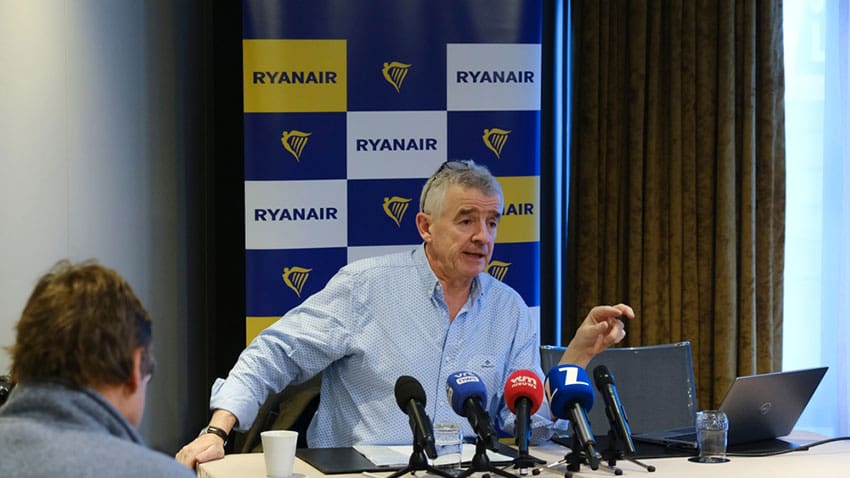
O’leary signs on at Ryanair until 2032 in a deal that could be worth more than £130m
Business

O’leary signs on at Ryanair until 2032 in a deal that could be worth more than £130m

by June 22, 2026

Michael O’Leary, the combative chief executive who turned Ryanair from a small Irish regional operator into Europe’s largest airline, has agreed to stay at the helm until 2032 under a contract whose bonus scheme could be worth more than €150m (around £130m).

The extension keeps one of European aviation’s most recognisable, and most divisive, bosses in post for another six years, and ties the bulk of his potential reward to financial targets that would require the budget carrier to roughly double its profits.

Provided O’Leary remains with the group until April 2032, he would be granted the option to buy 10 million shares at €26.70 each. The options vest only if the airline hits one of two demanding milestones: annual post-tax profit of €4 billion, or a share price above €42 sustained for 28 consecutive trading days.

To put that in perspective, Ryanair last month posted a record full-year post-tax profit of €2.26 billion. Clearing the €4 billion bar would mean almost doubling that figure, which is precisely the point of a long-dated incentive built to reward growth rather than presence.

“Achievement of these very ambitious targets would create substantial additional value for all Ryanair shareholders,” the company said in a statement.

This is familiar territory for O’Leary. Last year he was reported to be on course to collect bonuses worth more than €100m after the budget airline’s shares closed above €21 for a 28th consecutive day in May 2025, meeting a key performance target set years earlier. Business Matters covered that €100m share-option windfall at the time.

O’Leary, now 65, has run Ryanair since 1994. Over those three decades the carrier has grown from a relatively small regional airline into the continent’s dominant low-cost operator, carrying more passengers across Europe than any rival and building a reputation, fairly or otherwise, on rock-bottom fares and an owner who is rarely lost for a quotable line.

That outspoken style has kept him in the headlines well beyond the balance sheet. In recent months he has traded barbs over a mooted takeover and repeatedly attacked UK tax plans even as the airline reported record profits. For investors weighing a six-year extension, that visibility cuts both ways: a chief executive who shapes the narrative, but also one whose departure would leave an outsized gap.

Ryanair group chairman Stan McCarthy said the board had “commenced discussions” with O’Leary in the spring.

“I am pleased to report that this process, which included extensive engagement with Ryanair’s largest shareholders, has successfully concluded with Michael agreeing to extend his leadership of the Ryanair Group for the next six years to April 2032, for the benefit of all shareholders,” he added.

The reference to shareholder engagement matters. Pay deals of this scale routinely attract scrutiny at annual meetings, and structuring the reward around steep, clearly defined targets is the board’s answer to anyone minded to grumble about the headline number. As reported by RTÉ and Bloomberg, the package is explicitly performance-linked rather than guaranteed.

For owner-managers watching from the sidelines, the Ryanair arrangement is a textbook example of succession risk and founder-style leadership writ large. O’Leary is not a founder, but after 32 years he is as close to the company’s identity as any executive in Europe, and locking him in until 2032 buys the board time without resolving the underlying question of who follows him.

The lesson for smaller firms is the one that never dates: incentives should reward the outcomes that build long-term value, and no business, however well run, should be entirely dependent on a single individual at the top.

Read full article →

June 22, 2026
Brexit knocked 6% off the UK economy, Bank of England company data suggests
Business

Brexit knocked 6% off the UK economy, Bank of England company data suggests

by June 22, 2026

Brexit has stripped roughly 6 per cent from the size of the UK economy over the past decade, according to economists who have analysed internal Bank of England data covering the decisions, views and financial results of thousands of British firms since the 2016 referendum.

The study drew on the same intelligence the Bank uses to set interest rates, reconstructing how the UK might have grown had it voted to stay in the EU. Its conclusion is that about half the damage came from the sheer shock and uncertainty of the post-referendum years, with the remainder flowing from the higher trade barriers that followed Britain’s exit from the customs union and single market in 2021.

For the small and medium-sized firms that make up the bulk of the UK economy, the finding will feel less like an academic revision and more like a description of the past ten years: thinner margins, postponed investment and the steady accretion of paperwork at the EU border.

The research is co-authored by the British economist Nick Bloom, a professor at Stanford University, alongside economists at the Bank of England. Crucially, it is the first time the Bank’s granular information on the corporate sector has been deployed in this way.

That information comes from the Decision Maker Panel, a survey the Bank set up in 2016 with the express purpose of gauging the economic impact of Brexit. Normally used to help inform interest-rate decisions, it allowed the authors to track, year by year, how exposed individual firms were to different facets of Brexit, the impacts they reported, and the changes that showed up in their accounts.

The company-level data point to a 6 per cent hit over ten years. Set alongside five more traditional methods of analysis, the wider studies suggest a steeper average of around 8 per cent. The full paper, published through the National Bureau of Economic Research, sets out the economic impact of Brexit in detail, and carries the customary disclaimer that “the views expressed do not necessarily represent those of the Bank of England”.

Bloom argues that the UK was growing briskly in the years before the vote and could have at least partly matched the United States but for the disruption. The Bank’s company data, he says, offers important corroboration. His paper concludes that “in the case of Brexit, there was a substantial economic impact on the United Kingdom, but it arose gradually over the subsequent decade”.

The timing is notable. The Bank’s most senior figures have become markedly more forthcoming in recent months about the consequences of leaving the EU, a shift Business Matters has tracked as the governor warned the Brexit impact would stay negative for the foreseeable future.

Speaking to journalists, governor Andrew Bailey said that as a result of Brexit, “I think the level of activity and growth in the economy has been lower.” He went on: “And the reason for that is that if you reduce the size of the markets that we trade with, so we reduce our export markets, then that does tend to have a negative impact on growth,” adding that productivity and the size of the market had also been affected.

Bailey did, however, temper the verdict on the City. The impact on financial services, he said, was “not good”, but “nowhere near as detrimental as many people predicted at the time”.

Not everyone accepts the headline number. Some policy economists contend that it is inherently difficult to model how the UK would have fared without Brexit, and that such studies risk overstating the effect at a time of overlapping global shocks. Critics also argue the analysis does not fully capture the outperformance of US investment and technology, or the European energy crisis that struck four years ago.

The 6 per cent estimate sits within a familiar range. It is a touch above the 5 per cent blow calculated by Goldman Sachs, and it chimes with mounting evidence that smaller exporters have borne the brunt, as seen in the £27bn hit to UK exporters where the smallest firms have been squeezed hardest.

The latest version of the study has landed just ahead of the tenth anniversary of the referendum, and against a backdrop of cautious rapprochement. Prime Minister Sir Keir Starmer has said he will meet his EU counterparts at a summit in July to agree deals on food and farm exports, as well as electricity and emissions trading, with further areas of cooperation and alignment expected to be on the table.

For Britain’s business owners, the political mood music matters less than what it eventually delivers at the border. A decade on from the vote, the lesson buried in the Bank’s own company data is a sobering one: the cost of Brexit did not arrive in a single dramatic shock, but accumulated quietly, firm by firm, year after year.

Read full article →

June 22, 2026
Eight in ten SME owners fear what an Andy Burnham premiership would mean for their business
Business

Eight in ten SME owners fear what an Andy Burnham premiership would mean for their business

by June 22, 2026

The ink is barely dry on Andy Burnham’s by-election victory and Britain’s small business community is already braced for what comes next.

Exclusive research shared with Business Matters reveals that the overwhelming majority of the country’s small and medium-sized enterprise owners are fearful about what the Greater Manchester mayor’s arrival in Westminster, and his widely tipped run at Number 10, could mean for their firms.

The study, conducted by Trends Research, surveyed 2,000 SME owners in the days since Burnham swept to victory at Makerfield last Thursday. More than 80% told researchers they were fearful about the implications for their business, a striking figure in a sector that accounts for more than 5.5 million firms and over 99% of the UK business population.

Burnham took the seat with almost 55% of the vote, seeing off Reform UK and handing himself the Commons platform that, under Labour rules, allows him to mount a leadership challenge against Sir Keir Starmer. The mechanics of how a sitting metro mayor can also serve as an MP have been picked over in detail by the House of Commons Library, but for many business owners the constitutional fine print matters less than the policy direction it signals.

That anxiety has roots. Burnham has built his pitch on an interventionist, redistributive platform, and his name has been attached to proposals ranging from a land value tax to expanded local levies such as a tourist charge on overnight stays. For owner-managers already wrestling with higher employment costs, the prospect of a more activist Treasury is unsettling. Business confidence has been fragile for some time, as our reporting on how Labour’s tax decisions have dampened consumer and business sentiment has charted over recent months.

The fear is not abstract. It lands on people who are already stretched. Separate research has pointed to soaring stress levels among the UK’s smallest firms, and the Trends Research findings suggest a fresh layer of political uncertainty is now compounding that pressure. When eight in ten owners express unease about a single individual’s potential premiership, it speaks to how exposed the sector feels to decisions taken well above its pay grade.

It would be wrong, though, to read the numbers as a settled verdict. Burnham has not yet formally challenged Sir Keir, who has insisted he will not step aside, and the mayor has at points positioned himself as a champion of regional growth and a backer of hospitality through a lower VAT rate. The concern voiced by those 2,000 owners is rooted in uncertainty as much as opposition, and uncertainty can cut both ways.

What the research makes plain is that the small business community is watching Westminster closely and nervously. With capital allowances, employment rules and the tax burden all sensitive to a change at the top, owners have learned to take political turbulence seriously. As one survey after another has shown, including our own coverage of why business leaders fear that higher capital gains tax would stifle investment, confidence is hard won and quickly lost.

For now, the message from the shop floor and the spare-room office alike is one of caution. Britain’s job creators are not waiting to be reassured, they are bracing for impact.

Read full article →

June 22, 2026
Bloomberg bets big on London, pledging £400m-plus to power a green jobs boom
Business

Bloomberg bets big on London, pledging £400m-plus to power a green jobs boom

by June 22, 2026

The billionaire financier and former New York mayor is wagering that London, not Washington, is where the climate economy will pay off, committing more than £400m as he positions the capital as a magnet for green investment and jobs.

Michael Bloomberg, the billionaire American financial services and media mogul, is backing London to reap a wave of investment and jobs on the back of a boom in climate-fighting ventures and initiatives.

The former New York mayor and green campaigner, who has an estimated net worth of $109bn (£82bn), will this week unveil more than £400m of new funding for organisations tackling climate change during a visit to the capital, timed to coincide with London Climate Action Week, now Europe’s largest city-wide climate gathering.

“Businesses and investors recognise that the steps that fight climate change also drive economic growth and create jobs,” he is expected to tell an audience in the City of London. “As an international centre of finance and an engine of private sector innovation, London has a very important role to play.”

Bloomberg, known across the financial world for the data terminals that bear his name, is in the UK as UN Special Envoy on Climate Ambition and Solutions, hosting and anchoring a slate of events alongside his long-standing green ally Prince William and the United Nations secretary general, António Guterres. According to Bloomberg Philanthropies, Guterres will use one of the final major climate speeches of his term to address the global energy crisis at Guildhall, before the Earthshot Prize Impact Assembly and a Local Climate Action Summit convened with C40 Cities.

The 84-year-old, who considers London his second home and recently joined Berkshire’s Sunningdale Golf Club, plans to say: “London has helped to lead the way forward with bold actions to cut emissions and air pollution. People want to live in cities with clean air and, where people want to live, businesses want to invest.”

Over the course of the week, Bloomberg is set to commit $590m (£446m) of new funds to climate ventures, charities and initiatives, with a significant share expected to flow into UK businesses and organisations. It is a timely message for British firms, coming as the government’s Seventh Carbon Budget anchors a £105bn net zero economy that already supports tens of thousands of small and medium-sized enterprises.

Bloomberg Philanthropies has previously ploughed money into UK-based climate groups including the Prince William-fronted Earthshot Prize, C40 Cities, Kew Gardens, the Clean Air Fund, Global Fishing Watch and Blue Ventures.

The renewed commitment is striking for its timing. It comes just as many other large US investors and corporates, taking their cue from President Trump, have been pulling back from climate initiatives, with a string of household names from luxury to banking softening or delaying their net zero pledges. For UK firms weighing up whether the transition is still worth the capital, the argument that London should not retreat from net zero has rarely had a more deep-pocketed champion.

For the City, the calculation Bloomberg is making is a simple one: in an era of geopolitical fragmentation, the money, talent and jobs will gravitate to the places that keep faith with the green economy. He is betting that place is London.

Read full article →

June 22, 2026
Natwest to school all 60,000 staff in the ethics of AI
Business

Natwest to school all 60,000 staff in the ethics of AI

by June 22, 2026

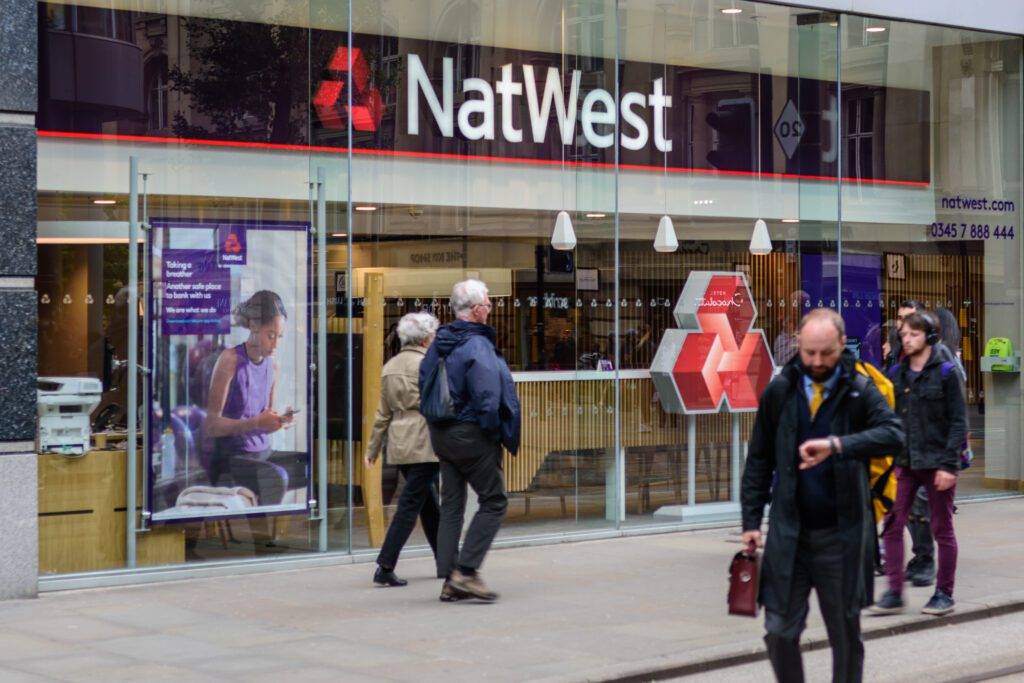
NatWest is to put its entire 60,000-strong workforce through training on the ethical risks of artificial intelligence, as the high street lender races to weave the technology through every corner of its operations.

The FTSE 100 bank said the course, which will take staff two to three months to complete, is designed to build “a strong culture of responsible AI” as the tools move from the margins into day-to-day banking. It draws on a programme NatWest first developed with the University of Edinburgh, now being opened up to the whole business as more colleagues reach for the technology.

The roll-out lands at a moment when Britain’s banks are competing hard to show they can deploy AI faster and more responsibly than their rivals. Barclays and Lloyds have both joined the Financial Conduct Authority’s live AI testing sandbox, and Barclays has said it will lean heavily on the technology as it targets £2bn of cost cuts by 2028. NatWest, for its part, has already upgraded its AI chatbot to offer more “human” interaction as it continues to shut branches.

The thinking is straightforward enough. Lenders hope AI will sharpen the productivity of their people and strip cost out of the business. Yet that same promise has stoked fears that large numbers of jobs could be automated away, and raised thornier questions about how staff use a powerful technology safely and fairly.

Paul Dongha, who runs NatWest’s AI strategy, said the bank wanted to “equip colleagues with the skills and confidence to use it responsibly” as AI became “increasingly embedded in how we serve customers and run our bank”. The course, he added, would hand employees “even more practical tools to recognise risks, ask the right questions and make better decisions in their day-to-day roles”.

The training itself was built in partnership with the University of Edinburgh’s Edinburgh Futures Institute, whose AI and data ethics programme for NatWest blends classroom teaching on AI fundamentals with sessions on data privacy, regulation and the wider implications for society and business. Having first run the course for leaders and selected colleagues, the bank is now extending it across the group, part of a broader push to build an AI-literate workforce.

The drive comes from the top. Paul Thwaite, the chief executive, has positioned NatWest at the front of the industry’s scramble to adopt AI. Speaking at The Times CEO Summit, he said “the economic prize for the country, but also for businesses like mine, is how quickly and how effectively you can adopt it”, arguing that the technology was “cutting across all lines of our business. I don’t think there’s a role that isn’t really affected.”

Thwaite was candid about what that means for jobs. While AI can lift the output of white-collar staff, there are real concerns it will replace many of them outright. In time, he told the summit, “there will be roles that currently exist that absolutely to all intents and purposes [will be] delivered by AI”. That warning chimes with a wider squeeze on entry-level work, with junior roles in finance and accounting among those hit hardest as employers cut graduate hiring and turn to AI.

NatWest’s own make-up has already shifted markedly. More than a quarter of the group’s employees now work in software engineering, a striking figure for an institution still thought of by most customers as a place to keep their current account. For a bank betting that the next phase of growth runs through automation, teaching 60,000 people how to use the technology wisely looks less like a nicety and more like a necessary insurance policy.

Read full article →

June 22, 2026
What to Expect from UK Software Development Firms
Business

What to Expect from UK Software Development Firms

by June 19, 2026

In all industries, companies are making efforts to adopt digital solutions, automate processes, migrate to the cloud, and operate with data. Consequently, software development companies are now considered strategic partners rather than mere service providers.

If you need any custom platform, enterprise solution, mobile application, or product modernization, then software development firms in the UK should be your go-to choice owing to their technical skills, compliance practices, and foreign experience.

However, finding the right software developer is about more than evaluating their portfolio and price tags. Knowing exactly what professional software developers can deliver may prove to be useful for forming expectations.

Strategic Guidance Before a Single Line of Code

In many cases, companies initiate software development processes having a certain technical solution in mind. Companies that have years of experience usually start by questioning assumptions and making sure that a certain technical solution fits their goals.

In case you are going to upgrade legacy systems, it would be very beneficial for you to discuss this project with experienced professionals. You can learn more about finding an appropriate company from the following link: https://luminarybrands.co.uk/blog/software-development-companies-uk/.

Instead of rushing into the process of development, UK companies usually hold discovery sessions, meetings with stakeholders, and do a lot of technical analysis.

The Development Process: More Structured Than Many Clients Expect

Another widespread myth is that software development starts right away after signing the contract. However, reputable UK-based companies tend to use an appropriate delivery methodology that aims at minimizing risks and increasing transparency. The typical process could consist of the following stages:

Discovery and requirements definition
Solution architecture design
UX planning
Development iterations
Testing and quality assurance
Delivery and release management
Support and optimization

During the development process, the client will have sprint reviews, demos, and progress reports regularly provided. Contemporary IT teams operate within the scope of agile methodologies, which allows evolving requirements without affecting the whole project.

In other words, this way of working enables businesses to validate their assumptions quickly and adapt their priorities based on new market realities. Moreover, it eliminates the need to wait for several months until the end of the project when stakeholders will be able to see how things look.

For big enterprise solutions, the development team might involve a solution architect, business analyst, developers, QA engineers, DevOps specialists, and a project manager.

Technical Expertise Across Modern Technology Stacks

The technology industry in the UK has built up a solid reputation in the realm of engineering. Several software companies are well-versed in multiple technologies, thereby enabling them to make recommendations in accordance with the needs of a specific project. Some examples of contemporary software partners include:

Area
Common Technologies

Frontend Development
React, Angular, Vue.js

Backend Development
.NET, Java, Node.js, Python

Mobile Development
Flutter, React Native, Swift, Kotlin

Cloud Infrastructure
AWS, Microsoft Azure, Google Cloud

Databases
PostgreSQL, MySQL, MongoDB, SQL Server

DevOps
Docker, Kubernetes, Terraform

In addition to development frameworks, several UK-based firms have added other competencies such as artificial intelligence, machine learning, cloud native technologies, cybersecurity, and data engineering.

Businesses must anticipate that their software development partner will translate any technology into business-related language. In essence, the most competent organizations should be able to connect architectural considerations to scalability, security, maintenance, and costs.

Communication Becomes a Competitive Advantage

The distinction between a good and bad outcome for an IT project is often defined by communication.

In the UK’s leading companies, transparency is highly valued. Clients usually get access to project management systems, sprint updates, development environment access, and stakeholder meetings.

Think about a project as a voyage on the sea. Without frequent navigation adjustments, even the most high-tech vessel will go astray. Communication ensures that everyone involved understands what direction the vessel takes in terms of business and project objectives. You should be able to rely on:

Timelines and milestones
Points of contacts
Escalation plans
Risk management processes
Demonstrations of delivered products

All this provides stakeholders with the opportunity to take decisions based on the knowledge gained and eliminates surprises close to project completion.

UK IT companies can be very appealing to international clients because of their excellent English language skills and vast experience with distributed and international projects.

Security, Compliance, and Risk Management

A security vulnerability discovered after launch is often significantly more expensive to fix than one identified during development. Once an application is live, even minor weaknesses can lead to service disruptions, emergency development work, customer dissatisfaction, and regulatory scrutiny.

For this reason, reputable UK software development firms invest considerable effort in security planning throughout the project lifecycle. They evaluate risks before development begins, monitor security during testing, and verify that protective measures remain effective during deployment.

This disciplined approach reduces the likelihood of costly remediation projects while helping businesses maintain compliance and protect valuable customer data. As cyber threats continue to evolve, early security investment has become a practical business decision rather than a purely technical concern.

Modernization Has Become a Business Priority

Current software development projects revolve around the concept of modernization because many large enterprises utilize old platforms plagued by accumulated technical debts. Although these technologies are effective, they often prevent innovation and raise maintenance expenses. In addition, it is not easy to integrate such platforms into modern processes.

Areas of Transformation

Depending on the business needs and available technologies, companies approach modernization differently. For example, some businesses migrate to the cloud. They opt for the decomposition of monolithic applications to enable flexible scaling and easier system updates. Programmers upgrade programming languages, enhance the user interface and develop APIs to establish data exchange between systems.

Why Incremental Change Works Better

The misconception regarding modernization that persists even today is that old systems need to be wholly overhauled. However, practical experience from reputable software development companies in the United Kingdom indicates that it is rare for them to suggest such a complete overhaul. The reason is that most companies opt for implementing changes in phases.

Such an approach enables enterprises to modernize their critical systems without causing any disruption in their functioning. It gives organizations the time to test results, minimize risks, and make changes in their priorities. With businesses investing increasingly in cloud native applications, phased modernization emerges as an excellent option.

Life After Launch

One of the areas which are least considered during software development is the post-deployment stage.

The software cannot be considered an asset that will never change in the future because expectations of customers change, technology develops, and other business needs come up.

UK-based software companies tend to provide a range of services after the software release, including:

Monitoring and maintenance
Performance tuning
Updating for security
Managing infrastructure
Adding features
Support

Sometimes cooperation does not end right after the software launch because many businesses consider the development company a consultant that participates in further decisions on the products and digitalization.

This approach allows companies to stay competitive without burdening their internal resources.

Evaluating Success Beyond Delivery Dates

Launching software on schedule is important, but delivery milestones tell only part of the story. The real measure of success emerges after implementation, when organizations begin to see tangible business outcomes.

Operational impact. Effective software should make everyday work easier. Teams may spend less time on manual tasks, complete processes faster, and gain better access to information needed for decision-making.

Customer value. Successful projects often improve customer interactions through faster services, smoother user experiences, and more reliable digital products. These improvements can strengthen customer satisfaction and retention over time.

Business growth. Technology investments should support broader business objectives. Increased revenue opportunities, improved scalability, and lower maintenance costs are often stronger indicators of success than the number of features delivered.

The most effective software development firms keep these outcomes in focus throughout the project, ensuring that technical decisions contribute directly to measurable business value.

Final Thoughts

What UK software companies deliver besides programming services is strategic advice, technical direction, modernization, security know-how, and operational assistance.

Any business entering into a software development relationship will find processes, transparency, governance, and emphasis on business results as key characteristics. Be it a creation of a brand new piece of software or modernization of existing assets – a competent software development partner may make a difference for your company.

When businesses treat software firms as partners who share their interests, rather than just contractors working on specific projects, more success is possible. It can be particularly important now that the global economy is becoming more and more digitized.

Read full article →

June 19, 2026
Coverd and Albert Wang: Why the Next Chapter of Credit Card Rewards May Be Written Around Everyday Spending
Business

Coverd and Albert Wang: Why the Next Chapter of Credit Card Rewards May Be Written Around Everyday Spending

by June 19, 2026

The modern loyalty program occupies a curious place on corporate balance sheets, recorded as a liability that many issuers quietly prefer never comes due.

For decades the economics of credit card rewards have rested on a predictable pattern of human behavior, namely that a substantial share of the points, miles, and cash-back balances consumers earn will sit dormant, expire, or be redeemed at a fraction of their advertised worth. Programs engineered around aspirational travel, tiered status, and partner portals have rewarded the disciplined few who master their rules while leaving the majority to accumulate value they rarely convert into anything tangible. The outcome is an industry that markets generosity while monetizing friction, and a generation of younger cardholders who have grown skeptical that the figures printed on their statements bear any relationship to money they will ever actually see.

Coverd, an Andreessen Horowitz backed fintech company preparing to bring its first product to market this summer, is wagering that this arrangement has reached the end of its useful life. The company’s namesake card, developed under founder and chief executive Albert Wang, is built around a single proposition that inverts the conventional model. Where traditional programs award points to be banked and deciphered later, the newly launched Coverd Card returns cash back on many purchases instantly, in amounts that can reach the full value of the transaction. A cardholder who buys groceries, fills a tank of gas, or orders lunch may find the purchase partially offset or, in certain cases, entirely covered at the moment of the swipe.

The mechanism behind that promise is a transparent rewards matrix that the company publishes openly, an unusual posture in a category long accustomed to burying its rules in fine print. The amount a cardholder earns on any given purchase is determined by where that purchase falls within the matrix, a structure that accounts for spending category, timing, and transaction size, and that yields a defined cash-back figure in place of an opaque accrual of points. Once those rewards are earned, the company returns the decision of what to do with them to the cardholder, who may apply a balance directly as a statement credit, take it as straightforward cash back, or carry it into a set of interactive in-app features designed to let users increase what they have already earned.

That emphasis on routine, unglamorous spending is deliberate, and it marks a departure from a rewards landscape oriented largely toward frequent business travelers and high-balance luxury consumers. Coverd’s early usage data points toward the categories that dominate ordinary household budgets, with cardholders concentrating their activity at major retailers and quick-service or fast-food restaurants including. The company has positioned the card around the spending of the broad majority of consumers whose everyday purchases have historically generated the thinnest and slowest-accruing rewards, a population that legacy programs have been comparatively slow to court.

The interactive layer reflects a wider shift in how a younger cohort of consumers expects to engage with financial products. Major investing, prediction market, and language learning companies have shown that introducing elements of immediacy, feedback, and play into categories once regarded as static can meaningfully change the frequency and depth of user engagement. Coverd is applying a comparable logic to the most habitual financial activity in most people’s lives, on the premise that rewards experienced in real time and shaped by the user carry a resonance that deferred points have never managed to deliver.

The early signals suggest the proposition is finding an audience ahead of the card’s formal debut. Coverd reports a waitlist of roughly 50,000 prospective cardholders and says it has covered more than $25 million in consumer purchases through its app to date, including more than $10 million in the month of May 2026 alone. Pre-launch, the company reports its application has been drawing approximately 3,000 downloads, pre launch.

Coverd has raised capital from a group of investors that includes Andreessen Horowitz, through its Speedrun program, along with Tusk Ventures, Yolo Investments, WndrCo, and Volt Capital. Its card is issued through Rain, a blockchain-based card infrastructure platform valued at $1.95 billion.

Whether Coverd can convert pre-launch enthusiasm into a durable market position will depend on questions that only scale can answer, among them the economics of returning so much value to cardholders so quickly and the company’s ability to sustain its rewards matrix as its user base expands. What the company has identified, and what its early traction appears to support, is a real gap between the way the rewards industry has long operated and the way a rising generation of consumers expects to interact with their money.

If that gap proves as wide and as lasting as Coverd is betting, the card’s arrival this June may register less as the debut of a single product than as an early marker of where credit card rewards are heading.

Read full article →

June 19, 2026
  • 1
  • …
  • 7
  • 8
  • 9
  • 10
  • 11
  • 12

    Get free access to all of the retirement secrets and income strategies from our experts! or Join The Exclusive Subscription Today And Get the Premium Articles Acess for Free

    By opting in you agree to receive emails from us and our affiliates. Your information is secure and your privacy is protected.

    Popular Posts

    • A GOP operative accused a monastery of voter fraud. Nuns fought back.

      October 24, 2024
    • Trump’s exaggerated claim that Pennsylvania has 500,000 fracking jobs

      October 24, 2024
    • American creating deepfakes targeting Harris works with Russian intel, documents show

      October 23, 2024
    • Tucker Carlson says father Trump will give ‘spanking’ at rowdy Georgia rally

      October 24, 2024
    • Early voting in Wisconsin slowed by label printing problems

      October 23, 2024

    Categories

    • Business (118)
    • Politics (20)
    • Stocks (20)
    • World News (20)
    • About us
    • Privacy Policy
    • Terms & Conditions

    Disclaimer: EyesOpeners.com, its managers, its employees, and assigns (collectively “The Company”) do not make any guarantee or warranty about what is advertised above. Information provided by this website is for research purposes only and should not be considered as personalized financial advice. The Company is not affiliated with, nor does it receive compensation from, any specific security. The Company is not registered or licensed by any governing body in any jurisdiction to give investing advice or provide investment recommendation. Any investments recommended here should be taken into consideration only after consulting with your investment advisor and after reviewing the prospectus or financial statements of the company.

    Copyright © 2025 EyesOpeners.com | All Rights Reserved